The mobile phone as a tool for cinematic creation
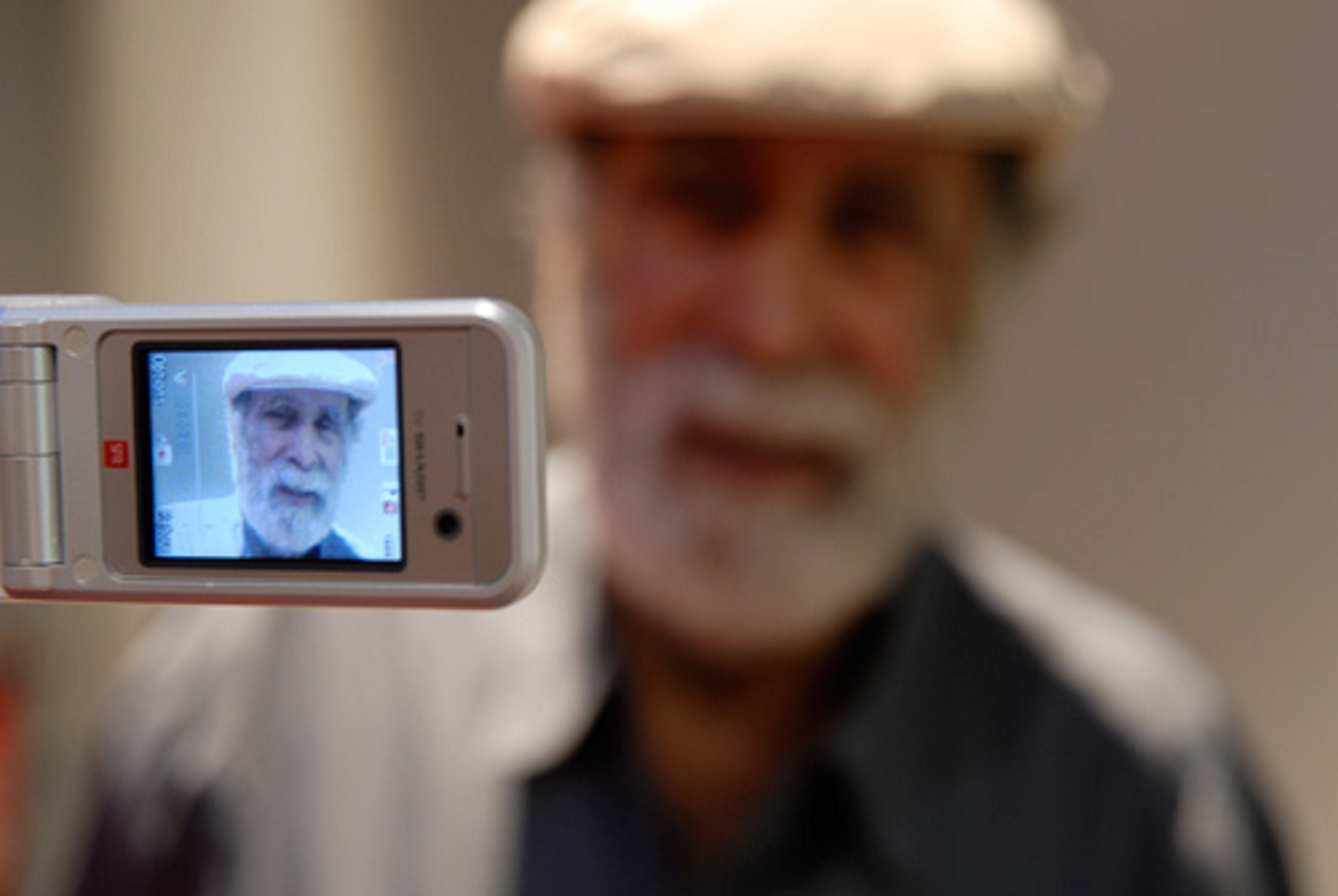
In twenty years, the mobile phone has revolutionized cinematic creation: as a tool always within reach, it enables the filming of the unexpected, the invention of new narratives, and the exploration of an aesthetic of fragility. This accessibility transforms everyone into a potential creator, gives rise to collective forms, and democratizes the act of filming, while opening up new spaces for resistance, sharing, and emancipation.
A revolution in your pocket
Twenty years ago, in 2005, the appearance of cameras in mobile phones marked a major anthropological shift. Not so much because of the technical novelty—lightweight cameras already existed—but because of this fundamental change: the filming tool is now always on one’s person. This ubiquity radically transforms what we film and how we film it.
Unlike the camcorder, which you had to consciously choose to bring along, the phone allows for the capture of the unexpected, the fortuitous, of what suddenly emerges in reality without warning. It opens up a new availability to the world, a capacity to seize those moments that, previously, would have left only traces in memory.
But more profoundly, we have shifted from a cinema of the eye to a cinema of the body. Like Rémi Lange, who placed his Super 8 camera at the heart of his amorous encounters, the phone becomes an extension of the filming body. At a concert, arms are raised, phones record without the eye framing. It is the hand that films, creating a kind of third eye detached from conscious gaze. The phone can pass from hand to hand, capturing multiple perspectives, abolishing the distinction between filmer and filmed.
The image as fragile and creative material
The first images from mobile phones were technically “poor”—few pixels, harsh compression, visual artifacts. But this very fragility became a language. To say that a low-resolution image is inferior in “quality” to a high-definition image would be like claiming that hyperrealist painting surpasses Impressionism—an absurdity that only technophile obtuseness could support.
Take the example of the film Mammah by Louise Courcier (2006), shot clandestinely in the hammam of the Paris mosque. The low resolution, far from being a flaw, transforms the filmed bodies into pictorial presences, removing all voyeurism to create a respectful intimacy. The pixelated image becomes a protective veil, allowing the filming of what should not be filmed while preserving the dignity of those present.
This glitch aesthetic, where technical error becomes a creative gesture, opens up visions of the world that our eyes do not perceive. The flaw becomes a revelation, the technical limit becomes a poetic opening.
New forms, new narratives
The phone has given rise to specific forms. Autobiography, first of all, naturally favored by this ever-available prosthetic eye. But above all, filmed correspondence, which with these tools takes on unprecedented immediacy. The project Temps mort by Mohamed Bourouissa (2007), where a phone smuggled into prison enabled a visual dialogue between inside and outside, could not have existed without this technology.
More fundamentally, the phone assumes its presence in the image. Unlike the traditional camera, which aims for transparency and omniscience, the phone reveals the device. When Richard Texier films his reunion with Enki Bilal and the embrace causes the image to tip, we no longer see the bodies but we know they are embracing. The emotion arises precisely from this absence, from what the image misses in order to better suggest it.
For the image is not what the camera records but what is born in our minds. The “Par la fenêtre” films I initiated demonstrate this well: people film from their window while recounting a memory. The real images are not those of the urban landscape, but those that form in our minds as we listen to the story.
A pedagogy of letting go
In my workshops, I have developed protocols that exploit these specificities. For example, groups of four people must make, in thirty minutes, a single-take film where the camera passes from hand to hand. Each person films and is filmed, and when someone appears on screen, we hear their thoughts in voice-over, spoken by the one filming.
This complex setup, with so little time to execute, forces participants to let go. No more fantasies of control, no more meticulous scripts: you have to do, improvise, discover by doing. As in theater or dance, ideas are born from gesture, chance, constraint. In half an hour, films of surprising density sometimes emerge, winning awards at festivals, even though they required only thirty minutes of collective creation!
The phone, a desacralized everyday object, allows for this boldness. One dares with it what one would not dare with a professional camera. It becomes a tool for creative emancipation, allowing everyone to access their own inventive capacity.
TikTok or the dissolution of the author
The most radical recent evolution concerns the very notion of authorship. On TikTok, a “trend” like the imaginary character “Josiane Pichet” in 2023 saw thousands of people create their own choreography to the same music. It is a permanent creative palimpsest where the distinction between author and spectator disappears. I can watch, but I know I could participate if I wanted to. This potential transforms my position into that of a spect-actor.
It is not only cinematic language that is being reinvented—with its POV codes, vertical formats, ultra-short durations—but social roles themselves. Amateur and professional: these categories explode when an amateur video can generate more revenue and impact than a professional production.
TikTok’s algorithm takes the logic further: every video posted is tested on 200 people. If it generates interest, it is distributed more widely, solely on that criterion. No need for marketing strategy, network, or institutional legitimacy: only resonance with an audience matters. It is a radical form of cultural democracy.
The image as political act
This technical democratization carries a major political charge. The images of George Floyd in 2020, police violence filmed at protests, Alex Chan’s film about the 2005 riots, etc.: so many examples where the phone becomes a tool of counter-power. The image provides evidence, documents, resists.
But this political dimension also reveals troubling paradoxes. Why does the right master these tools better? Why does the left, which should champion digital emancipation, retreat into a reactionary stance, criticizing social networks while using them daily via WhatsApp, Instagram, or others?
This cognitive dissonance is distressing. By demonizing social networks, the left abandons an essential battleground. It leaves mastery of these new democratic spaces to others. Worse, by sanctifying traditional media over citizen voices online, it betrays its own values of popular emancipation.
Escaping cinematic capitalism?
The question of the economic circuit remains complex. The phone certainly allows for production outside classic industrial logics, but distribution often remains captive to capitalist platforms. Netflix arrived in France in 2014 to a wide-open field: massive demand for content and no relevant local supply, as French professionals clung to their obsolete models.
Yet alternatives exist. In my projects, I use autonomous platforms, hosted on my own servers. Participants retain ownership of their creations, can share or delete them. It is a form of digital sovereignty on a small scale, but it shows that democratic and sovereign practices, which foster connection, are possible with digital tools.
The model of digital commons—free software, creative commons, open archives—offers avenues. The “global license” law, promised by François Hollande in 2012 and then buried, could have created a virtuous ecosystem where downloading would have been legal and remunerated. Instead, we remain stuck in the absurd criminalization of popular cultural practices.
Images yet to be born
What strikes me in my workshops is that participants do not necessarily continue filming afterwards. The unique experience of collective creation remains engraved, but is not repeated mechanically. The tool alone does nothing: it is the situation, the encounter, the framework that enable emergence.
Today, the image becomes orality. We send videos as we used to speak. Snapchat and its ephemeral content push this logic to the extreme: the image is no longer memory but pure conversation. This transformation is dizzying for those who remember a time when producing an image required preparation, resources, legitimacy.
But this apparent ease must not obscure the essential: we have an unprecedented power in our hands. The power to bear witness, to create, to resist, to transmit. In the street, faced with injustice, I can become an active witness. It is a new democratic responsibility.
The future in question
Digital technology is not the enemy of culture but its new territory. Refusing to think about it is to exclude oneself from the world in the making. Young people are not victims of their screens but inventors of new forms of sociality, creation, and resistance.
The issue is not time spent in front of screens but what we do there. The same criticism could apply to us adults, constantly on our phones. The real question is: how can we inhabit these digital spaces in an emancipatory way?
Filming without knowing what we will do with it, following the creative impulse without immediate production goals, is to rediscover a freedom that institutional cinema had lost. The phone gives us back this possibility of creative uselessness, of the gratuitous gesture that may, perhaps, become a work. For a work often arises from the unexpected. An image made without intention sometimes becomes the source of a future film. The phone, always there, allows for this sensitive vigilance. Not to seek, but to be available to what happens. To prepare not to make a film, but to be in a state of making.
This revolution is only just beginning. The forms that will be born, the resistances that will be invented, the emancipations that will be built will exceed what we can imagine today, provided we agree to let go of our certainties, our hierarchies, our disdain. Provided we dare to trust the collective intelligence being invented in these new spaces.
The phone in the pocket is not just a tool. It is a democratic promise. It is up to us to fulfill it.

The Pocket Films Festival was born in 2005, when cell phone cameras first appeared. I conceived and directed it, at the request of the Forum des images (Paris), which produced it, in partnership with SFR and the CNC. From its very first edition, it was the benchmark event on the subject of audiovisual creation with cell phones and pocket cameras. It ran for 6 editions, from 2005 to 2010, at the Forum des images and the Centre Pompidou. The website www.festivalpocketfilms.fr, a record of the event (350 films available for viewing), is still online.
From 2011 to 2013, the lux Scène nationale de Valence produced a follow-up event, Caméras mobiles, which I also directed.
And now, creating with mobile tools is part of the general field of audiovisual creation.
-

The mobile phone as a tool for cinematic creation
Revolutionizing practices and perspectives.
In twenty years, the mobile phone has revolutionized cinematic creation: as a tool always within reach, it enables the filming of the unexpected, (…) -

The birth of the Pocket Films Festival (2005)
An audiovisual revolution at the dawn of the mobile era.
Discovery of the origin and ethics of the Pocket Films Festival, the original laboratory for mobile phone audiovisual creation in 2005. (…) -

Book : “Mobile phone and creation”
Collective book to which I contributed, with the article “From economy to the conversation and audiovisual creation”. Publication Date : 19 (…) -

Catalogs of all editions of the Pocket Films Festival
The Pocket Films Festival (which I founded with Forum des images - Paris, concepted and directed), during its six years of existence (2005 to 2010 (…) -

Book : “Shoot a movie with your mobile phone”
The first complete guide to filmmaking with mobile phones, Dixit publishing in 2008, which remains a reference. Free download.Download the (…)


-
The birth of the Pocket Films Festival (2005) An audiovisual revolution at the dawn of the mobile era.
Discovery of the origin and ethics of the Pocket Films Festival, the original laboratory for mobile phone audiovisual creation in 2005. (…) -

A conversation with Benoît Labourdette Interview with Benoît Labourdette by Roger Odin for Bianco e nero magazine (2010).
The film theorist Roger Odin (1939-2023) saw in the arrival of video in cell phones “for the first time in the history of cinema, the (…) -

Short bio & filmo Benoît Labourdette
Benoît Labourdette is a filmmaker, educator, researcher, essayist and consultant in cultural innovation and digital strategies. He is also a (…) -

Takavoir Film Festival (Niort - France) Distribution of films
Retrospective of short films by Benoît Labourdette.The Festival Takavoir in Niort, is a “child” of the Pocket Films Festival. I had advised its (…) -

“Make your own cinema" Article published in the Dernières Nouvelles d’Alsace on August 4, 2024.
A cell phone film-making tutorial from Benoît Labourdette, to keep the kids busy over the summer!Appeared in Dernières Nouvelles d’Alsace on (…)
