About the “new” images
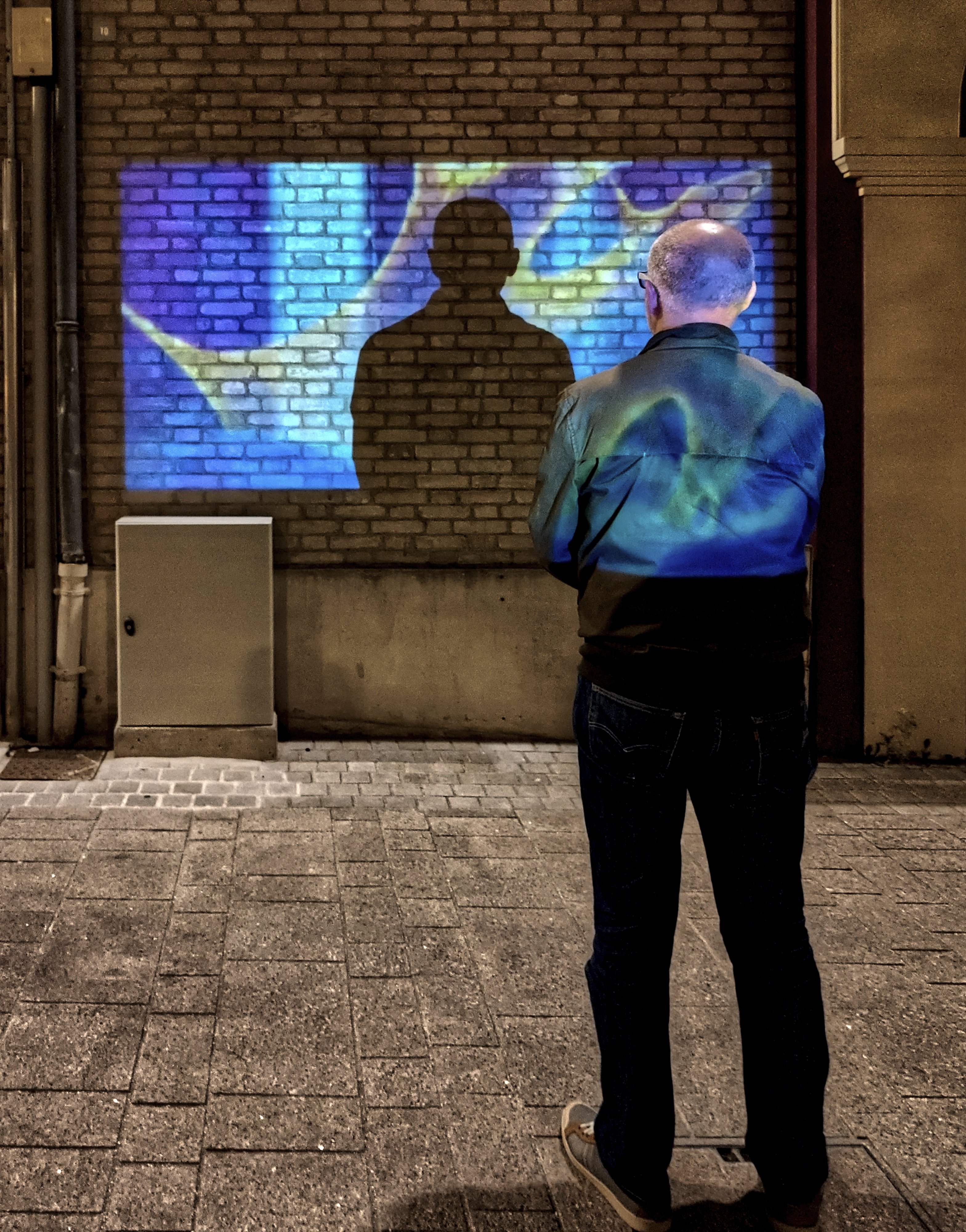
Between ephemeral fashion effects and genuine artistic revolutions, “new images” often reveal more about our relationship to the present than to the future, and often more about the seduction of fashion than constructive innovation for the future.
The ambiguous seduction of novelty
Novelty exerts an undeniable attraction on us: it sells because it enriches our experience, broadens our knowledge, our sensations and our representations. However, it must not be too disruptive, because too radical a questioning will disturb rather than seduce us, and we will resist it. The “new images,” which give their title to so many cultural and industrial events in the audiovisual and media field, must therefore bring their share of innovation without excess, at the risk of being rejected.
The seductive power of “novelty” attracts spectators and mobilizes funding, whether public or private, all eager to associate their image with modernity, a sine qua non condition for continuing to exist tomorrow. Human beings, for their part, will evolve naturally, their social practices will transform as they always have. Cultural and artistic structures, organizations and proposals have no choice but to adapt to new needs, if not to precede them.
This is why, on an institutional level, “new images” constitute a “winning” recipe; they seem to guarantee organizations their longevity, the sale of their cultural products and access to funding. There are a few bold ones who dare to truly question the frameworks established by industrialists and their commercial strategies, but paradoxically, behind the “new images” label, we most often discover surprisingly conventional projects, reproducing very classic patterns in the relationships between authors, producers and spectators. Many projects presented as innovative in innovation-focused aid commissions adopt an almost advertising aesthetic, their very form becoming a selling point.
We hardly find in these approaches any deep anthropological reflection on the future transformations of relationships between humans and images. Rather, it is about validating seductive projects that have only the appearance of the future, a superficial representation of what is perceived, at a given moment, as modernity. These “inventions” quickly fall into oblivion because their real objective was not to explore the future, but to convince funders to finance them immediately, which is often not even conscious for the project authors, who may themselves believe in these representations.
We thus delude ourselves with the illusion of writing the future when basically, we are only concerned with the present. Take the example of “web-documentaries,” those interactive audiovisual objects presented as the future of audiovisual between approximately 2007 and 2015.
Technological mirages: from CD-ROM to web-documentary
The technological modalities of CD-ROMs from the 90s and web-documentaries from the 2010s, twenty years later, were actually very similar. When I dared make this comparison at the time, it was almost a crime of lèse-majesté: the future was there, in the web-documentary, it must not be contested! Yet, it was obvious that these productions resembled feature for feature experiments conducted fifteen to twenty years earlier, experiments that had not produced memorable works and, above all, that had created objects that quickly became unreadable, victims of technological obsolescence.
Chris Marker’s interactive CD-ROM Immemory (1997) perfectly illustrates this phenomenon. An interesting project but less rich, in my opinion, than his films, which were technically much simpler, it quickly became unreadable on computers, a few years after its release. The Centre Pompidou finally gave up investing in its technical update, as the operation proved so complex. This experience should have served as a lesson: these objects, widely funded and celebrated as embodiments of modernity, quickly fell into oblivion and became technically inaccessible, well before the disappearance of physical media. The compatibility problems of CD-ROMs and then DVD-ROMs made these contents obsolete at high speed.
When the web-documentary era began in 2007, Flash technology allowed interactivity in web browsers. However, this proprietary technology was already doomed, its publisher Adobe itself officialized its disappearance a few years later. I and others warned producers very early on about the need to use free technologies, certainly less accessible but much more sustainable, rather than this system doomed to obsolescence. I met with categorical refusals and even contempt.
Why this resistance? Flash was fashionable, mastered by developers, allowing for the rapid creation of attractive objects and therefore obtaining funding. Exploring the true technologies of the future, that is to say creating with the free languages HTML and JavaScript and CSS, still alive today, would have required more effort. These subsidized “innovators” were actually prisoners of the present. Their “new images” were condemned to rapid obsolescence and inaccessibility.
Today, despite our warnings, the vast majority of web-documentaries are nothing more than gray rectangles on our screens. Even if the technical object still exists, it is unreadable, and has been for a long time. We would have to resurrect period computers with their obsolete software. This situation should encourage us to cultivate critical thinking and be wary of fashion effects, those moments when everyone proclaims that there is only one path to follow.
Now consider virtual reality: these 360° videos viewed in headsets, which allow you to turn your head in the filmed space. Fascinating experiences, certainly, which triggered almost a gold rush. All innovation funding focused on this technology, convinced that every household would soon be equipped with a headset. Facebook itself rebranded and acquired Oculus at a premium price to massively develop these technologies. However, the announced revolution still hasn’t happened.
Personally, from 2016, I explored these tools with a critical approach, seeking to divert them and understand what they meant, through creativity. I used these cameras to create strange images, to question the very notion of immersion. Rather than broadcasting in a headset, why not project in space? Rediscover the spirit of pre-cinema, of old panoramas? The Théâtre du Rond-Point and the Théâtre des Champs-Élysées, with their circular architecture, still bear witness to these immersive experiences prior to cinema.
And what really works today? These vast immersive installations. L’Atelier des Lumières, a successful private initiative, simply offers monumental video projections in spaces, with still, moving or interactive images. This trend has developed by creating viable economic models and experiences that durably touch the public. Yet these projects have not been subsidized as “new images” experiments. They were not perceived as innovative because they offered singular, assumed visual experiences, rather than supposedly new ones.
The future is built by our courageous and grounded choices, not by commercial opportunities. Those who have worked outside of trends, deepening their projects without yielding to the sirens of apparent novelty, are those who endure and will endure. The phenomenal success of TikTok and its impact on our lives is overwhelming proof of this.
Outside academicism: where the future is really invented
I remember that in 1995, my first feature film, La tête dans l’eau, was selected at the “New Cinema Festival” in Pesaro, Italy, a prestigious festival established for a long time. The films screened, including mine, had nothing to do with any technical or commercial novelty. They belonged to avant-garde cinema, which is cinema considered as a plastic art, privileging formal research over conventional narrative. The term “new” here designated the representation of a non-academic, timeless art, resolutely outside fashion effects.
These were proposals that were precisely not fashionable. My film explored audiovisual language, images and sounds, rhythms and sensations. The narrative, although present, remained secondary to the plastic dimension of the work. Perhaps the true new images are those that, outside of trends, dig into the representations of tomorrow’s world without seeking to satisfy the academic criteria of the moment, because trends are only disguised academicisms.
Authentic new images come out of academicism. It is outside these frameworks that the future is truly invented.
True revolutions: when usage prevails over technology
Let’s return to TikTok: what are these videos, if not very simple sequence shots, filmed by everyone with their phone and shared online? The application certainly facilitates editing, adding titles and effects, but what creates massive adoption is not technological innovation, TikTok actually contains very little, the innovation lies in new uses, in the redistribution of roles: spectators become actor-participants in a collective audiovisual narrative that is built through interaction. This may seem familiar, YouTube already allowed these exchanges, and before that classes sent video letters from one country to another. But TikTok democratized the practice by directly integrating the camera into the broadcast application, a function that has been technically possible for a long time and was already present before in other applications.
The real change brought about by TikTok is anthropological: it disrupts the hierarchy of cultural productions by valuing amateur creation. Commercially speaking, this enhancement of amateurism goes against the interests of professionals, who innovate precisely to maintain their symbolic power.
So yes to new images, but above all yes to new practices, to paradigm shifts on the nature of art and culture. Yes to fundamental questioning, not in a commercial but humanistic logic, on relationships between human beings. This is where we can truly speak of new images.

The image has become a language that everyone “speaks” on a daily basis, much more so than before the democratization of digital tools. Thus the stakes of images touch more than ever our existence in a very direct way, at the psychological, sociological, political, artistic levels... It seems essential to me not to avoid critical thinking about images, their technologies and uses. To think, there is nothing like experimenting, searching, conceptualizing, sharing. I share here resources, projects and experiences around images, which I hope will be useful, in the fields of education, art, philosophy...
-

The Selfie, the Filter, and the Two Bodies
The image of self as therapeutic working material.
A young woman retouches her ID photo using artificial intelligence. The educator accompanying her tells her: “That’s not you. You’re already very (…) -

The object that disposes
What machines change in mediation.
When we choose a tool for mediation, we choose a device of relationships. The technical object carries within it a history, a politics, ways of (…) -

The contemporary functions of images: beyond memory
Towards an anthropology of image-as-speech and its consequences for mediation.
We think we know what an image is. We think it is a trace, a memory, a proof. But images have changed function without our fully realising it. For (…) -

Vision is a reconstruction
What the eye does not see, and why it changes everything about our relationship to images.
We believe we see the world as it is. We believe our eyes capture an objective image of what lies before us, the way a camera would capture a (…) -

Image education as a space for connection
Trusting how people see to restore dialogue.
On March 16, 2026, during the National Meeting of Regional Image Education Centres, organised by Normandie Images in Rouen, I took part in a round (…) -

The Reality and Fiction of Images
How our perceptions navigate between memorial reconstruction and multiple image regimes.
Images perpetually oscillate between real and imaginary. This porous border reveals less a confusion than a fundamental characteristic of our (…) -

Cinema and artificial intelligence, two innovations looking at each other
Reflections on technological upheavals and their creative echoes.
Cinema and artificial intelligence share a similar trajectory: disruptive innovations first decried, then becoming transformative industries of (…) -

The Accelerated Eye
Manifesto for a new ecology of the gaze.
What if speed were not the enemy of culture, but the instrument of a new form of sensitive intelligence? A radical reappropriation of our right to (…) -

The Selfie, Mirror of Narcissus?
A Plea for Redefining Our Relationship to Images.
The omnipresence of the selfie raises questions: is it a sign of a narcissistic era? I argue, on the contrary, that this gesture, poorly (…) -

The mobile phone as a tool for cinematic creation
Revolutionizing practices and perspectives.
In twenty years, the mobile phone has revolutionized cinematic creation: as a tool always within reach, it enables the filming of the unexpected, (…) -

About the “new” images
A critical reflection on technological innovation and real cultural transformation.
Between ephemeral fashion effects and genuine artistic revolutions, “new images” often reveal more about our relationship to the present than to (…) -

The cinephilia of excerpts
Legitimizing new “impure” practices.
Traditional cinephilia venerates the complete work, but the internet has given rise to a new form: cinephilia of the excerpt. Enthusiasts now (…) -

For a photographic ecology
A method of opening up to oneself through images.
Photographic ecology proposes using the image as a method of opening oneself up. Not photographing less, but exploring differently: photographing (…) -

Cinema and death
To redefine cinema as an intrinsically diverse phenomenon.
Cinema, as a mechanical recording device, shares a unique relationship with death. This connection redefines the cinematic experience, which is (…) -

Artificial intelligence is an opportunity for free and experimental cinema
AI offers humanity the opportunity to reclaim its place.
Artificial intelligence is a threat to the professional academic sector that produces blockbusters and other commercially driven films, and an (…) -

The difference between image and sound from a neurological point of view
A tool for audiovisual creation.
Images and sounds exist through our perception. The eye and ear transform light and pressure into electrical signals, interpreted by the brain. (…) -

La réinvention de la séance collective de cinéma sur TikTok
Renaissance spontanée du partage de l’art comme humanisme.
Contrairement à l’idée que les réseaux sociaux isolent, ils réinventent des moments de partage collectif, comme la séance de cinéma. Sur TikTok, (…) -

For contemplative cinema
Theoretical opening of the definition of cinema
What is cinema? This question, posed by André Bazin in the 1950s, is, in my view, a very important one. Cinema, like any other art form, always (…) -

Bellapoarch, or the Mona Lisa of the 21st Century?
Analysis of a success.
A 10-second video posted on the social network TikTok on August 18, 2020 has made, one month later, more than 400 million views, and the highest (…) -

Vertical films
Reflection and starting point for experiments.
Moving images are verticalizing. This is far from being anecdotal and has an impact on our representation of the world. What philosophical changes (…) -

Audiovisual workshops to combat gender stereotypes
Methods for audiovisual creativity.
Thought-provoking ideas and proposals for audiovisual workshop concepts for nuanced and useful actions, with the aim of building critical thinking (…) -

Drawing on architecture
The projected image is an extremely rich track to animate architecture, private or public space, the theatre stage. I have been experimenting with (…) -

Pocketfilms-Empathy
Project to support psychosocial and pedagogical practices around the empathy clinic and using images. By Serge Tisseron and Benoît Labourdette, (…) -

Research-action “Image Education 2.1”
Collaborative action-research project led by Benoît Labourdette production in 2018 and 2019, to develop the synergy between teenage cinema (…) -

The singularity, a collaborative transmedia artistic project
“The singularity” is a collaborative transmedia project, launched in 2016 by Benoît Labourdette. Around a thematic spine, over a long period of (…) -

Ciné Lab # 6: “New usages, digital cultures. What (R) evolution for cinemas?”
Day of reflection and common development of innovative projects, for cinema operators and mediators.The ACRIRA and the GRAC (Rhône Alpes (…) -

Smugglers images national metting 2016 : pico-projection workshop
As part of smugglers national meetings of images 2016 November 19, 2016, I proposed a “pico-projection workshop”, experiences shared with (…) -

Spirit Journal : article “Lives in Pictures”
I published the article “Lives in Pictures” in the June 2016 issue of the Spirit Journal on the theme “Power of Images”. Issue edited by Carole (…) -

Tell me LED
Creative residency at the Maison Populaire de Montreuil: participatory creation and feature film. Creative residency at the Maison Populaire de (…) -

Book: “Image education 2.0”
Practical guide (free download).
“Image education 2.0” (under the direction of Benoît Labourdette), practical book of image education in the digital age, published by ACAP. Free (…) -

Ministry of Culture (France) : National Consultation on Arts and Cultural Education
The Ministry of Culture and Communication (France) launched in November 2012 a “National Consultation on Arts Education” to “enable all young (…)


-

Online training course: “Short film, digital and 21st Century: new media, new uses, new paths”. 43rd Grenoble Open Air Short Film Festival : film analysis course.
The Grenoble Open Air Short Film Festival always starts with a two-day course. For the 43rd edition of the festival in 2020, the workshop is (…) -

CEFPF : Formation « Concevoir, réaliser, financer des contenus pour les nouveaux médias » Stage de 5 semaines (formation en présentiel, à distance ou mixte).
Cette formation approfondie proposée par le CEFPF, dont le formateur référent est Benoît Labourdette, permet l’appropriation des nouveaux (…) -

CEFPF :“Designing, producing and financing interactive transmedia content” training course Trainings for new media
Vocational training on technologies and strategies for developing transmedia projects.For the eighth year, I am the referent trainer of this (…) -

ARTE - Training manufacture of a multimedia work Trainings for new media
The Franco-German channel ARTE is, like all TV channels, changing the very nature of its activities. ARTE pioneered early on the web (with ARTE (…) -

Forum des images : Film and digital video training Trainings for new media
The Forum des Images cultural institution in the city of Paris, is a cultural place of film programming, offers a collection of films about Paris (…)
