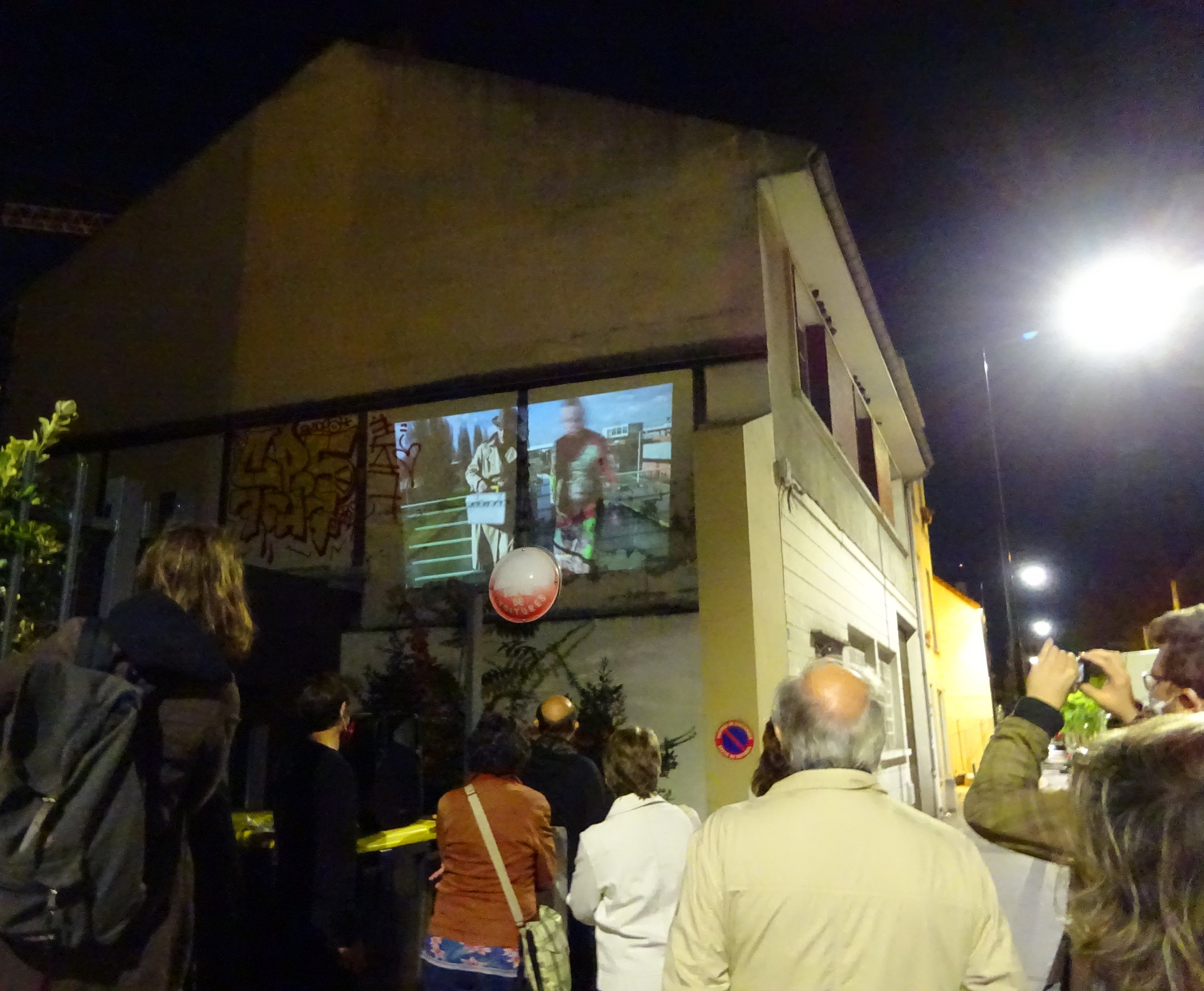
Cinema, often perceived as an art of image and sound, is deeply connected to architecture. Through spaces, movements, and scales, it shapes immersive environments. From the screenplay stage, integrating this architectural dimension enriches the viewer’s experience, making them feel as though they are moving through and living within these worlds.
Cinema is also an architectural art
Cinema is a vast art form that can encompass all other arts, yet it possesses certain specificities tied to other disciplines, notably architecture. It is often viewed as an art of image, or image and sound, rather than an art of architecture—of space and movement. Yet, cinema is profoundly linked to architecture. Whether through the places it reveals, the way it guides us through these spaces, or how characters inhabit them, architecture plays a central role.
There have been many films where sets were not to scale, appearing larger or smaller than reality. Cinema also frequently plays with scale effects, tied to camera lenses. Depending on the lens chosen, spaces can appear more or less vast, more or less receding. Techniques like the dolly zoom, where a forward dolly movement is combined with a reverse zoom, transform the space behind a character.
In short, cinema is, among other things but very strongly, an art of architecture. This is also why it immerses us so deeply in its worlds—it feels as though we are living within them, almost physically. So, how can this architectural dimension be incorporated into the screenplay? I believe it must be considered at multiple dimensions.
1st Dimension: The Overall Architectural Journey of the Film, Scenes, and Their Settings
The first level is that of places. In what locations does the story unfold? Do we return to the same places multiple times? Do we explore different areas of a house gradually, or not, and at what points in the story? The structure of movement through spaces, the discovery of places, is already present in the screenplay, in the scenes, in the unity of place within scenes. Simply by looking at the list of scenes in a screenplay, one can envision the viewer’s architectural journey—the path they take through the film’s architectural space.
2nd Dimension: The Journey Within Each Unit of Action
There is a second level, which occurs within each sequence, or unit of action. Do these units of action take place in a single location or multiple locations? And what is the distance between these different places within the same unit of action? In the experience of space, do we move around a lot within each unit of action, or not? For example, a unit of action could involve someone leaving their home, boarding a train, traveling to another city, and visiting someone else. This is one unit of action. We’ve moved from one place to another, crossing an entire country. In another unit of action, we might simply move through a living room, where a lot can happen. Thus, the relationship to architecture within the action itself, in each unit of action, creates a strong connection to our movement through the film’s architectural space.
3rd Dimension: The Psychological Relationship of Characters to the Spaces They Inhabit
There is a third level, which is the characters’ relationship to architecture. Are the characters at home? Do they feel like strangers? Are they building spaces, buying spaces, or being hosted? How do they experience the spaces they move through? This is a crucial dimension of identification, as someone who is never at home feels less secure than someone who is comfortably settled. Conversely, someone who is comfortably at home but whose space is threatened with destruction, for example, introduces a different emotional nuance.
4th Dimension: How Spaces Are Filmed
The fourth level, more subtle to describe in the screenplay, is how spaces are filmed. What type of lens is used? Is it filmed from above, below? Is the camera fixed while the character moves through the set? Or do we follow the character, giving us the sensation of moving through the space? This relates to a physical relationship with architecture. This fourth level could be called the physical relationship to architecture. It is a directorial choice, but one that should be addressed in the screenplay. It is a question of distance from the architecture: do we watch the characters move through the space, or are we with them, moving through it ourselves?
5th Dimension: The Soundscape
Finally, the fifth architectural level is the soundscape, which is also a crucial way of representing architecture. What do we hear in the ambient sound? How do sounds resonate? Do we hear the noises of the city outside? Birds chirping through a window? The cacophony of a factory we are moving through? In short, the soundscape in which we immerse the audience, and which must of course be described or hinted at in the screenplay, adds a powerful architectural dimension to the film. This is particularly important for shaping the film’s architecture—the architecture experienced by the viewer—because sound is the primary factor in creating a sense of immersion, even during the reading of the screenplay: if sound is evoked, the reader will feel even more immersed.
An Architecture of Multiple Dimensions
Considering the architectural dimension of a film will shape it into a deeply experiential object for the viewer. They will feel as though they are moving through this world themselves, sensing their body within this space. From the screenplay stage—and this may seem surprising, but it is truly something to consider from the very beginning—the viewer will have been included in this multi-dimensional architecture, which is that of cinema.


