Public funding for culture is currently perceived as being under considerable threat, and so the cultural sector seems to be in an extremely fragile state. I’d like to draw up a few perspectives from a slightly different point of view on this subject.
A Shift in Progress
At the time of my writing of this, in 2025, certain public funding mechanisms for culture are being withdrawn or eliminated, which weakens the sector and will unfortunately lead to very concrete consequences. This concerns the traditional model of how the cultural sector operates in France, which is currently being transformed by political choices made by elected officials who do not see their role in the same way as their predecessors did.
Any change in model, and thus in habits, is destabilizing for a sector, and that is absolutely normal. Of course, we must mobilize to defend the social purpose of the professional sector in which we operate. But we must also, it seems to me, acknowledge that the context in which we live is changing. It is constantly changing on multiple fronts: political, climatic, ecological, cultural, educational, industrial, digital, economic, etc.
In France, the arrival of François Mitterrand to power in 1981 led to public budgets for the cultural sector doubling. Culture was not nonexistent before. Therefore, Mitterrand’s rise to power was good news for public culture. But the cultural sector, like any professional sector in a society, exists only through its social purpose. It does not have a direct social necessity tied to its funding; it remains a political choice. We could very well not have a Ministry of Culture, and yet there would still be culture! This is well documented by Frédéric Martel in De la culture en Amérique (2006), a work in which he points out that, unlike in France where the state plays a central role in funding culture, in the United States, it is the market and private patronage that dominate. He explores how this influences cultural production.
Thus, there are public policy choices regarding whether or not to intervene in the cultural field. And it is evident that a cultural sector not funded by public money would take on very different forms compared to one funded by public resources.
At first glance, one might think that without public funding, there can be no risk-taking, no artistic research, as everything would be subject to a brutal market logic that would stifle cultural diversity, which is nonetheless essential for the renewal of cultural diversity in societies. In my view, this is neither entirely true nor entirely false. Questions of research and experimentation are just as necessary for private entities as they are for public ones. Private entities also need to renew themselves and require research and development. Simply put, the forms of research and development are not the same: the way they are funded, their professional structure, etc. I do not want to suggest that there are no issues with the reduction of public support for the cultural sector. Rather, I want to emphasize that, as professionals in this sector, we can position ourselves in a constructive approach within changing models, including during crises. By doing so, we might be more effective than if we remain solely in the mode of defending past achievements.
A Turning Point for the Cultural Sector?
I am not saying that these achievements are ill-gotten; I am saying that it is important for the cultural sector to develop antifragility and robustness, to embed itself more deeply in the social fabric, perhaps in a more interdisciplinary way and with renewed artistic forms that need to be reinvented.
I believe we are at a turning point in the history of the French cultural sector. It seems essential to me to innovate in how we think about the role of culture in society. This involves rethinking funding models and collaborations, with, among other tools, the valuable framework of cultural rights. Cultural rights, I believe, can greatly assist in this, as culture is necessary everywhere.
Catching the Wave of Cultural Innovation
Take the train, for example, which is a daily environment for many French citizens, whether it’s a commuter train or a long-distance train. The country’s economy relies on rail transport. In these spaces, what is the place for culture? Does it have a place? At first glance, no. Or only in an event-based manner, on banners during construction work.
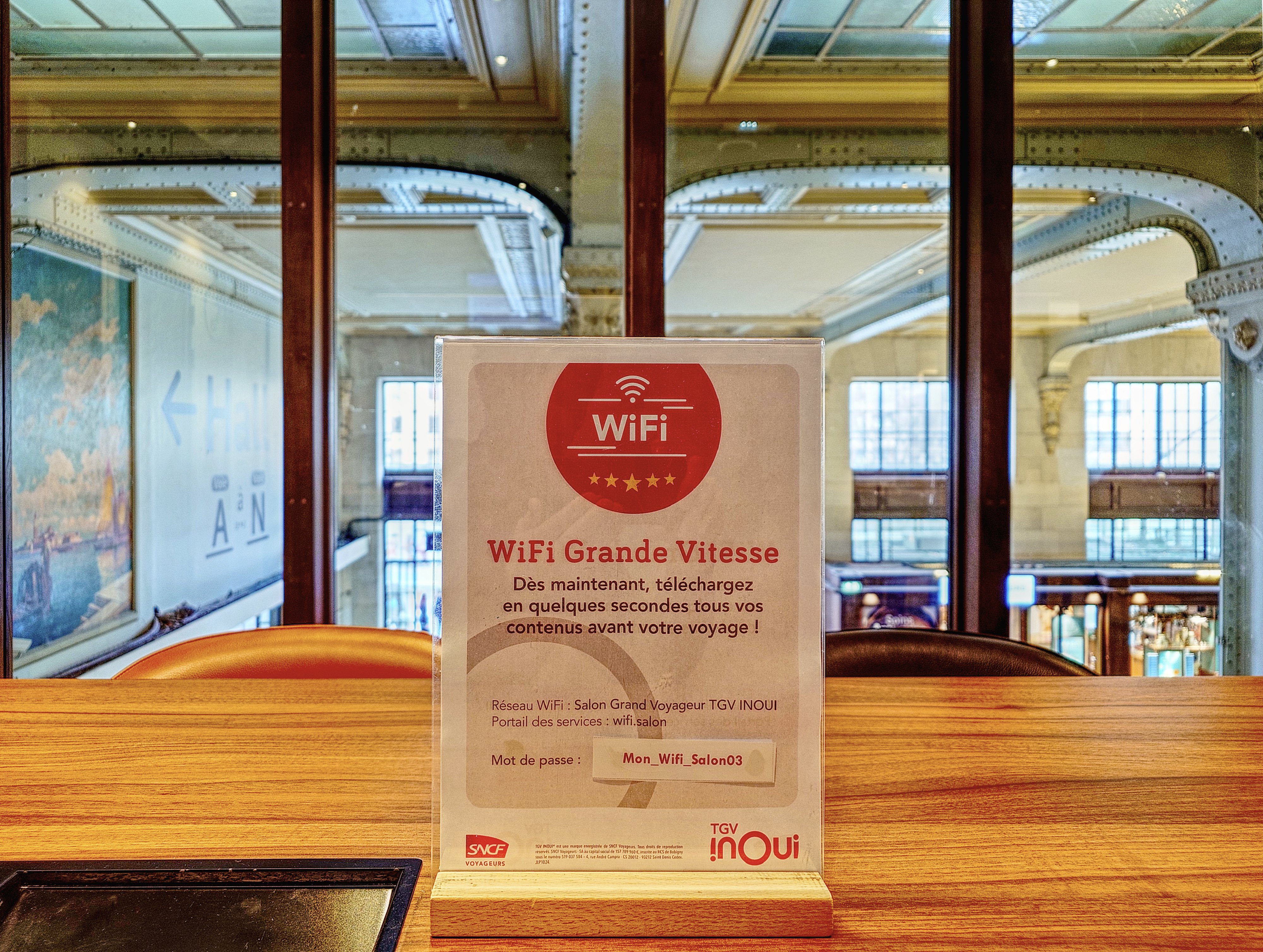
But if you go on a TGV or other long-distance train, we are told that we can connect to Wi-Fi and consume cultural goods, newspapers, films, books... What are they? Has there really been any thought given to this? What portion of the rail sector’s budget is dedicated to culture? In my opinion, this portion is minimal. And in my opinion, our role as cultural professionals is perhaps to reflect on what could be imagined and implemented in these spaces. There have been numerous cultural projects with the SNCF. But nothing has matured. Everything remains as one-off, non-sustainable experiments.
One might think that culture has no place there, that after all, people have other things to do when they take the train. That is false.
Because what do many people do on long-distance trains? They watch movies, read books, listen to music... They engage in cultural practices. And cultural practices are extremely developed in this context. But they are mostly managed by actors other than those in the rail sector.
I am not saying it would be easy to convince the SNCF to invest significant budgets in culture. I am simply pointing out that cultural practices are massive there, and thus there is a huge opportunity for this professional sector to cultivate many more cultural projects. What would this serve? Well, it would better align cultural practices with travel practices.
I do not mean that there should be more films about trains; I mean that by developing culture in these spaces, it could further enhance the quality of the passenger experience and thus profoundly transform the place of the rail sector in the mental representation that the French have of it.
I do not have a precise idea of what should be done. However, I know that if more numerous and well-constructed cultural experiments were conducted there, it could lead to very strong anthropological transformations. And to produce these transformations, it would require the work of many cultural professionals. The necessary funding would then exist de facto, as it could increase train ridership.
Of course, research and development would be needed, but as the name suggests, research serves development, and research involves experimentation, trial and error. Any company that wants to grow knows it must invest to innovate, and if it does not, if it does not invest, it will gradually impoverish as it ages, meaning it will slowly drift away from the reality of its surroundings and the needs of the time.
The New Role of Cultural Professionals
I chose the example of the SNCF at random. I could have taken any other professional sector as an example. What I want to highlight here is a new role for cultural professionals: a pedagogical role vis-à-vis many other sectors beyond the traditional public sector supporting culture in France.
This, in my opinion, is extremely important. There are many people to educate about what the development of a cultural sector within their domain can bring to their profession, to ensure they continue to exist tomorrow and exist better. And I’m not saying it’s easy to implement. The educational task is immense.


