Rethinking culture beyond institutional walls: how spontaneous practices redefine our relationship with creation and question established cultural policies.
The legitimacy of spontaneous cultural practices
When people organize in their homes, among themselves, or with a few strangers, sessions for sharing readings, music, dance, even karaoke, in an organized or improvised way, without any link to any institution, official organization, or public or private funding, these cultural practices are completely legitimate. They constitute true cultural institutions: they are collective, established, organized practices, situated in space and time, invested in by the participants, and then stored in memories that can leave a lasting mark on their lives.
These practices can achieve remarkable quality. Someone might admirably sing a childhood song from their country, with an authenticity that no professional performer could match. I do not postulate any cultural hierarchy, but I observe the richness of these practices in respect for the cultural rights of everyone, as defined by the Fribourg Declaration on Cultural Rights (2007).
I myself have regularly organized creative evenings where the principle is simple: each person brings a creation to share for a few minutes. We are all at once artists and spectators, in a resolutely multidisciplinary approach—reading, cinema, performance, theater, photography, cooking, whatever we want. This practice aligns with what Nicolas Bourriaud called “relational aesthetics,” where art becomes a pretext for creating social bonds and shared experiences.
The emergence of a parallel cultural movement
One could object that I am a culture professional. It’s true, but I observe these practices among many people far removed from the institutional cultural sector. Moreover, some subsidized cultural venues draw inspiration from these spontaneous dynamics, implicitly recognizing their value.
The in-home theater of the Théâtre 71 de Malakoff in the 1980s paved this way. Today, the Théâtre de la Poudrerie in Sevran operates without a fixed location, taking over the apartments of volunteer residents or public spaces. Another example, the application Hormur, structures these practices into a cultural social network, creating a minimal economic model through ticketing. Or artists like the singer Ingrid Courrèges organize apartment tours via social media, working by “passing the hat” in a voluntary donation economy.
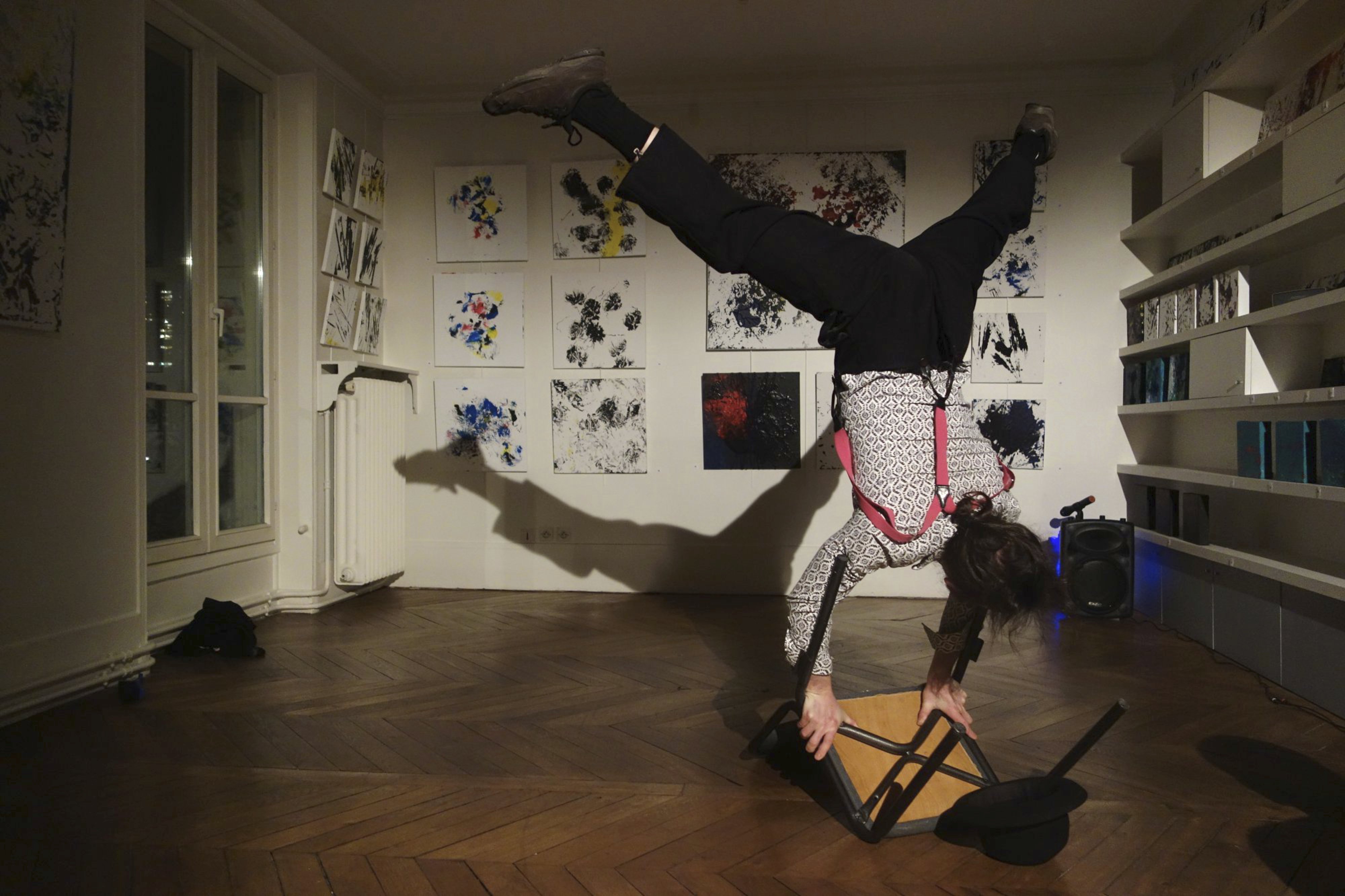
These non-institutional institutions naturally integrate amateur, professional, and participatory practices. The apartment exhibitions, which I have often organized or visited, attest to the importance of these moments for their participants. The engagement and concentration there equal, or even surpass, those observed in official museums or concert halls. These special moments create connections around creation, which is precisely the fundamental role of a cultural policy.
Rethinking cultural autonomy in the face of institutional constraints
The cuts in public funding for culture deserve to be fought, but to defend a truly democratic culture, not to perpetuate a domineering and condescending one. The French tradition of cultural policy, despite its noble intentions, often reproduces patterns of symbolic domination that Pierre Bourdieu extensively analyzed in Distinction (1979) or that Michel Schneider criticized so aptly, profoundly, sharply, and humorously in La comédie de la culture (1993).
Everyone has the power to institute, to breathe energy into non-institutional cultural institutions. If public funding decreases, let’s seize our creative capacities. Wherever we have the power, let’s establish the culture we need. This approach echoes the notion of “cultural empowerment” developed by Paulo Freire, where communities regain control of their cultural expression.
Instead of waiting to be taken care of, let’s reinvent our practices, whether we are professionals or not. This approach does not mean accepting budget cuts without acting. On the contrary, it is the most effective way to resist: to build concrete connections, create precedents, sow ideas. By building these networks, we become stronger to also defend the public funding necessary for institutionalized culture.
Cultural action as concrete political engagement
One might consider it scandalous for private initiatives to substitute for what should be a public cultural service. But what real pressure do we have on public officials who are often disconnected from the cultural realities on the ground and from their missions as representatives of their constituents’ needs? Our political action can be immediate and concrete. We have this power of refoundation.
If, during a transitional period, cultural practices become predominantly amateur, if the professional sector temporarily shrinks, where is the fundamental problem? Culture is what creates social bonds, and we can create it ourselves. Professional artists already spend most of their time seeking funding rather than creating. If they earned their living differently, it could nourish their creation and pull them out of a sometimes sterilizing insularity.
I am not advocating for the abandonment of legitimate claims on the use of public funds. But the posture of the complainant waiting to be taken care of is not the most politically engaged one, I would like to emphasize. A claim can defend corporatist interests without being truly political. The political, according to Hannah Arendt, is concrete engagement in the life of the city, the creation of spaces of shared freedom.
Cultural vitality versus corporatism
The example of street art perfectly illustrates this dynamic. Born in illegality, without an economic model, with artists buying their own spray cans and risking fines and prison, this movement eventually came to be recognized and integrated by the establishment and the art market. Why? Because it spoke to people, created debate, provoked—in short, because it was alive.
This spontaneous culture produces changes at all levels of our institutions. As Michel de Certeau noted in The Practice of Everyday Life (1980), popular cultural practices constantly divert and reinvent imposed frameworks. Nothing prevents us from becoming the main actors in cultural practices that do us good personally and collectively.
Even without an apartment, even in situations of extreme precarity, anyone can propose cultural practices. There are no conditions on the possibility for each person to create a cultural institution that participates in cultural policies. This message is for every citizen, but also for every culture professional: instead of dedicating our energy to potentially sterile claims, let’s organize more shows, events, and exhibitions in our homes and elsewhere.
For a living and shared culture
Who can stop us from creating? No one, except our own blockages, our ego problems, our sterilizing corporatist mindsets. Yes, I am hard on cultural corporatism, because it defends the “how” while forgetting the “why.” It transforms culture into an economic sector to be protected rather than a living force for social transformation.
Culture is too important to be a prisoner of corporatisms that dry it up. As Antonio Gramsci wrote, culture is the privileged terrain of hegemony, but also of counter-hegemony. By creating our own non-institutional cultural institutions, we participate in this battle for the meaning and values of our society.
Let’s reinvest in a cultural policy undertaken by each person. We will then see, progressively, institutionalized culture trying to catch up with and support these spontaneous initiatives. Because true culture is not that which is imposed from above, but that which emerges from the deep-seated need of communities to create, share, and make meaning together. It is in this creative tension between the instituted and the instituting that the future of a truly democratic and living culture is at stake.


