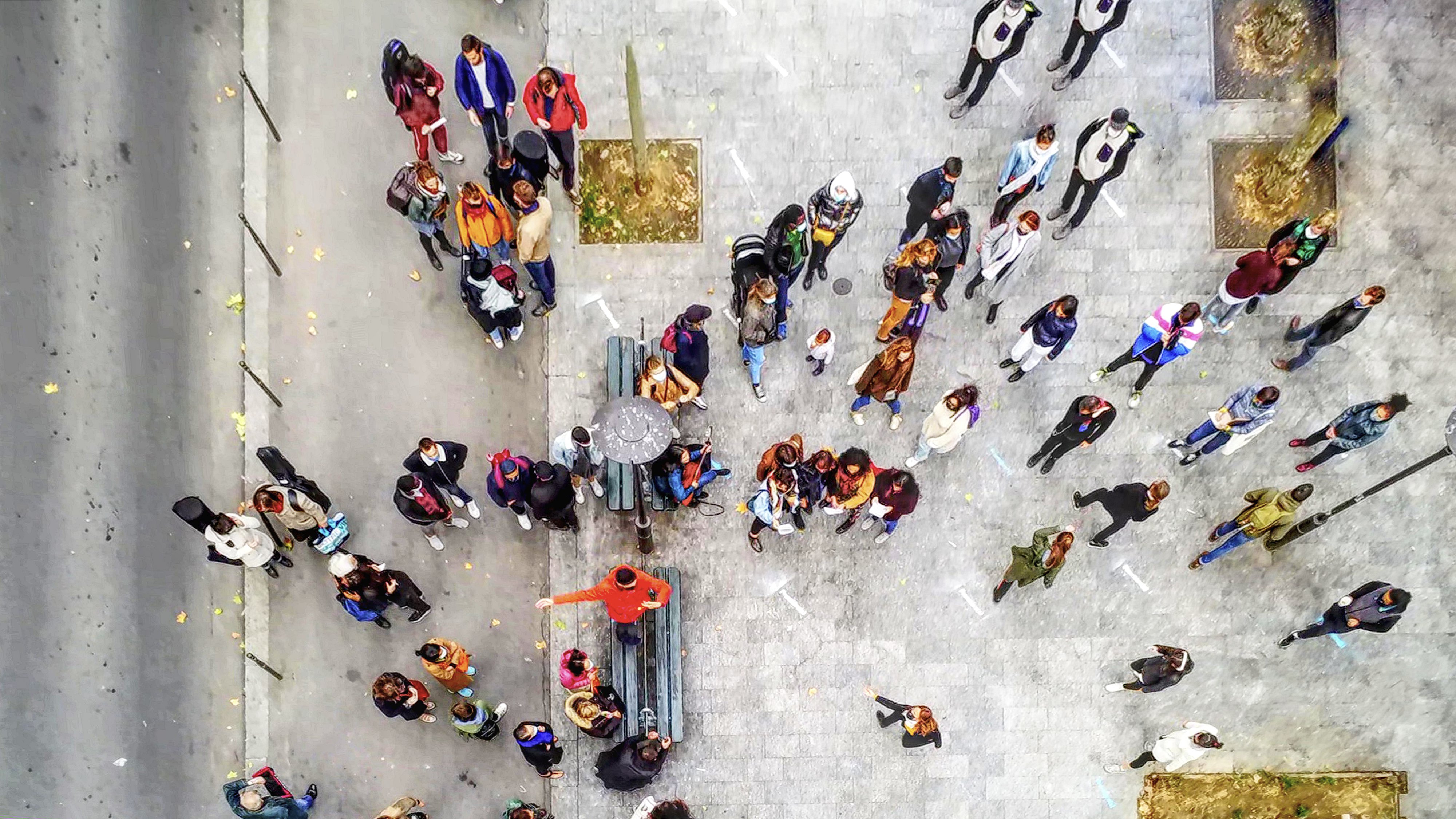
Faced with the crisis of cultural democratization and a growing disengagement of public action in the cultural domain, new forms of artistic distribution are emerging. These initiatives, carried out outside traditional circuits, reveal a genuine capacity to reweave the link between creation, territories and citizens. Among them, apartment performances or those in atypical venues embody a “soft revolution” that restores meaning to the encounter between artists and their audiences.
A culture closer to residents
These alternative formats, often implemented directly by artists without the intermediation of subsidized or private institutions, allow for the creation of unprecedented proximity relationships. By settling in apartments, gardens, workshops or cafés, culture becomes an integral part of daily life. This direct contact surface between art and society enables the formation of local artistic communities, woven at the intersection of residents, businesses, associations and living spaces, emerging ones that deserve in my opinion to be supported and developed.
It should be noted that this approach, although updated today, is not new. Apartment theater, from the 1980s, had already been explored under the impetus of progressive institutions like the Théâtre 71 of Malakoff (92). However, these experiences remained within an organized, supervised, often institutional framework. Today, in a context of cultural disintermediation, artists themselves can take charge of the production, distribution and animation of these events.
Sociologist Bernard Lahire, in The Culture of Individuals (2004), reminded us that:
“Cultural democratization also involves the invention of new spaces for encounters between works and audiences.”
The return of the street performer: the example of Ingrid Courrèges
Singer Ingrid Courrèges perfectly illustrates this new situation. Marginalized for her critical positions during the Covid-19 crisis, she developed a “hat-passing” tour model, in venues chosen by the hosts themselves. Thanks to her TikTok community, she manages to bring together an audience that shares her values of freedom, independent thinking and creativity. Accompanied by her husband and equipment, she embodies this new figure of the modern street performer, from the Latin saltare in banco, “to jump on the bench,” a nomadic artist capable of transforming any place into a temporary stage, into a space for listening and exchange.
This direct encounter between art and daily life reactivates the transformative power of the artistic gesture. As André Malraux wrote:
“Art is the shortest path from man to man.”
Making a living room, garden or workshop into a scenic space is not trivial: it’s a way of shifting perspectives, symbolically restructuring lived space, opening a poetic breach in everyday life. As a practitioner myself of these approaches for 15 years through participatory itinerant projections, I can testify to the strength of this artistic and sensitive sharing at the heart of neighborhoods.
Towards a citizen and decentralized cultural network
It is now time to sustainably structure this type of initiative. Thanks to the possibilities offered by digital tools and peer-to-peer logic, we have the means to build an alternative, decentralized and solidarity-based cultural network. The idea would be to create a collaborative platform, based on open source and self-managed principles, connecting artists and hosts around a common agenda.
This would not be an “Airbnb of culture,” a formula that should be avoided so as not to induce a commercial or consumerist logic, but rather a shared artistic hosting community. A cooperative-type application, allowing free encounters between cultural proposals and curious citizens, according to ethical, transparent and equitable rules.
As economist Françoise Benhamou emphasizes in The Economics of Culture (2017):
“Alternative models of cultural distribution constitute an appropriate response to contemporary mutations in cultural practices.”
Such a platform would also reactivate the notion of territorial networking: individuals who have already hosted a performance could, in turn, relay other artistic proposals in their neighborhood, their city or their professional network. It’s an entire organic cultural cartography that could thus emerge, like a living network where local appropriation becomes a driving force for artistic circulation.
Restoring a political place to culture
Paradoxically, this bottom-up dynamic could spark renewed awareness among political decision-makers. Seeing citizens spontaneously invite artists to their homes, organize tours, co-produce events, is to highlight a profound, often neglected need: that of a lived, shared, essential culture. This movement could challenge local authorities too quickly tempted to treat culture as an adjustment variable, to consider it as “non-essential.”
Finally, it is important to emphasize how much this evolution encourages artistic forms that are lighter, more mobile, more permeable to the constraints of reality, and therefore more resilient. Less spectacular perhaps, but more anchored. As Michel de Certeau affirmed in The Practice of Everyday Life (1980): “Space is a practiced place.”
Through their simplicity and accessibility, apartment performances (and more) reinvent our living spaces as territories of expression and sharing. They remind us that culture is not a closed building but a movement, a living link between individuals. It’s up to us to ensure that this link becomes a genuine collective infrastructure, enabled by digital networks, serving a cultural project for all.
The collaborative digital resource platform for amateur artists Azimut, which I built collaboratively for MPAA, which is at the beginning of its emergence, is a first exploration laboratory, at this precise location on the subject of amateur artistic creation, but the connections are numerous.


