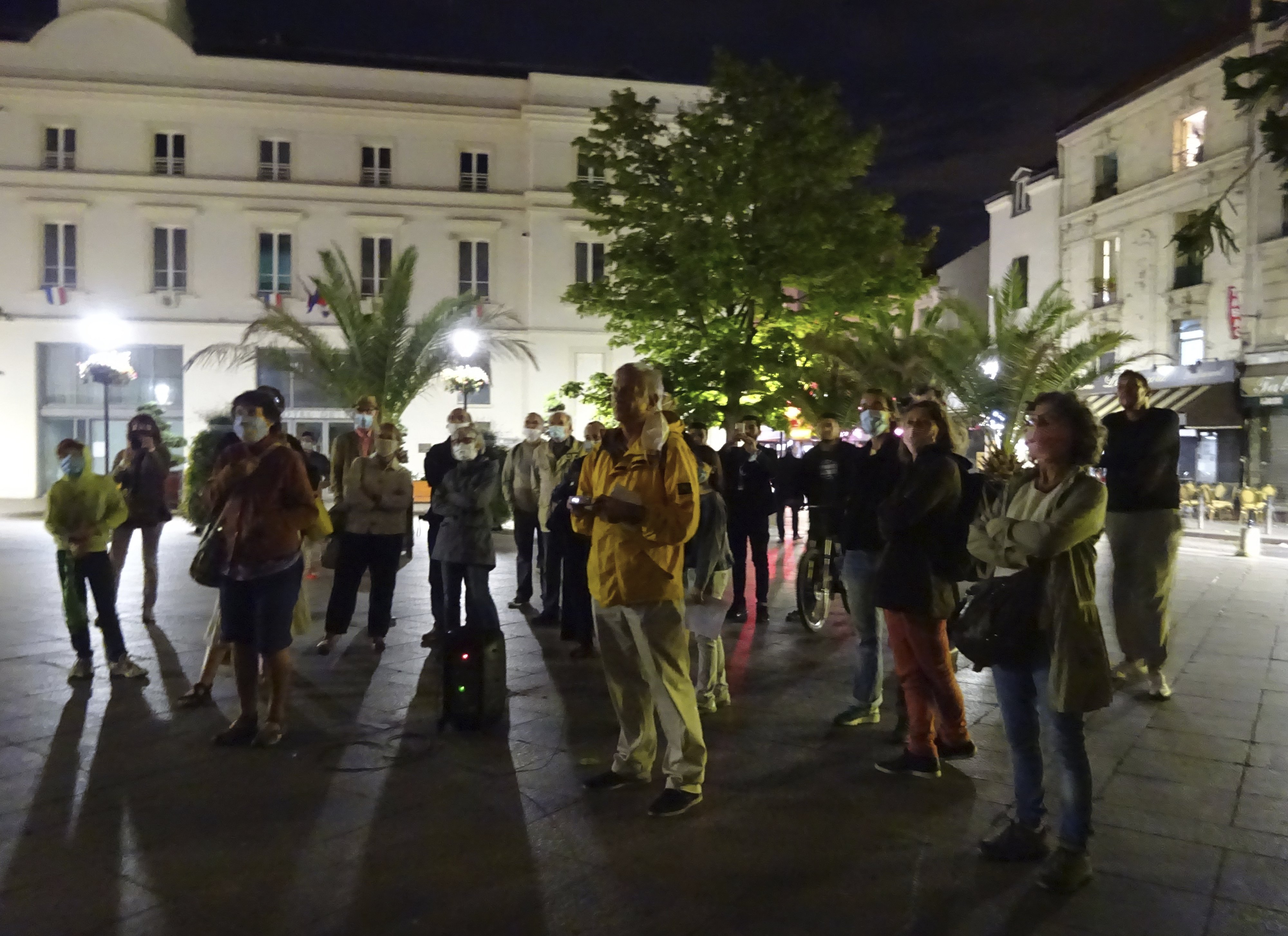
Facing budget cuts, the public cultural sector must reconnect with its democratic mission. Beyond corporatism, professionals must strengthen their ties with citizens and fully assume their political responsibility.
An entrenched phenomenon
In 2025, the French cultural sector is undergoing financial turbulence, which I believe presents an opportunity to clarify the proper use of public funds in service of culture. I hope this clarification of mine can prove useful beyond this immediate period, as the vision I propose is one I have held for a long time and, in my opinion, will remain valid for years to come. This is not merely a contingent article tied to a momentary situation, defending a particular stance, but rather a proposal for deeper reflection.
The public cultural sector—funded by citizens’ taxes—finds its meaning in the political sphere, that is, in the community. The community is not the property of elected officials; it belongs to all citizens. Therefore, regardless of who is currently in office, their mission is to serve citizens, of course within the framework of the policies they advocate—but to serve citizens nonetheless. Otherwise, they are not fulfilling their role as elected representatives; they are something else entirely. Everyone is free to do as they please in their personal lives, within legal limits, but as elected officials, they have far greater responsibilities than others. And as citizens, as cultural professionals, we too have duties.
Rights, duties, public and private
Here, I would like to speak more precisely about the duties of cultural professionals who are currently suffering from significant present and announced budget cuts. I offer my interpretation of this phenomenon and, above all, propose very concrete avenues for progress—not in the sense of defending the cultural sector for its own sake, which is largely meaningless, but in terms of the role of this publicly funded cultural sector in serving the common good. Anything funded by the common good must serve the citizens.
It is entirely possible to engage in culture privately, without seeking public support, and in that case, such cultural activities have no prerogatives, of course. Everyone is free to do as they wish. But as soon as public money is involved—that is, funding derived from citizens—we, as professionals, are in the service of those who finance us. It is not the regional cultural affairs departments or other local authorities; it is the citizens who, through their votes, have delegated decision-making power to elected officials. It is the citizens who pay, not anyone else—let us never forget that. The regional cultural affairs director does not pay; their role is merely to distribute funds as best as possible, in accordance with the law and chosen policies, which themselves must respect the law and the constitution—though unfortunately, this is not always the case.
Politics and artistic criteria
Thus, we expect political and institutional leaders to act with integrity in distributing funds, and this same integrity in spending must be at the heart of the ethics of cultural professionals—artists, organizers, directors of institutions, staff, etc.—in the publicly subsidized sector.
Since we have chosen not to allocate equal amounts to all artists, we must organize the redistribution with integrity, based on criteria. There are always criteria, more or less clear, more or less vague, more or less contingent. And it is our collective responsibility to refine and reflect on these criteria. They are in constant evolution, under perpetual revision. This is the very concept of democracy and its institutions: to continually work on criteria, whatever they may be, whether in the cultural field or elsewhere.
The superficiality of corporatist battles
The cultural field is no exception. And as Michel Schneider’s 1993 book La comédie de la culture (The Comedy of Culture) well documents, the French public cultural sector is also a “court,” with its own internal politics and power struggles that have absolutely nothing to do with the common good or the missions outlined in the law.
Of course, it is of utmost importance to guard against court politics, against privileges granted to some at the expense of others—and especially at the expense of what citizens receive in return for their money, which is collected from them by obligation. Our duties toward citizens are enormous. At this stage, I believe we must be very wary of corporatism—that is, professional sectors defending their narrow self-interests. Our role, collectively, is to serve the public, because this is public money.
Certainly, there are professional sectors, and these sectors doing work for the public must obviously be respected, with labor rights, fair funding, etc. But at a time—not a new one—when political (or rather, politicized) decisions are drastically reducing public funding for the cultural sector, it seems to me necessary to adopt a more macroscopic perspective. Because if we only have a corporatist vision—tied to the interests of a single profession—we will be very weak, lacking any political argument to defend the budgets being taken from us, which hinder the fulfillment of our missions.
The political role of cultural professionals
I believe we have no choice, collectively, but to position ourselves politically—that is, to focus on the meaning of our cultural actions for citizens. What must be defended are budgets, but these budgets must absolutely serve a purpose, and it is up to us to defend that purpose. If we do not, we leave politicians free to claim, for example, that culture is non-essential and that they will therefore choose to fund it less than other things they deem more essential.
Thus, it is up to us—professionals and citizens—to prove to them, to explain why, in our view, culture is essential. But this is not just rhetoric. We must truly understand for ourselves why and how we are engaged in this essential role of culture for the common good. It is not enough to say it; we must be able to argue it. We need not only arguments but also a subject for those arguments—meaning we must be personally committed.
For me, this is not about constructing a pseudo-democratic argument as a rhetorical tool to defend corporatism. No, that is not at all the purpose of the reflection I am sharing here. Rather, it is about cultural professionals reinvesting in democratic arguments, reasserting them, and defending them to elected officials, technicians, and the broader public. Because if we want to be supported by citizens, citizens themselves must be convinced that paying for culture—that their money going to culture rather than being withdrawn from it—is justified. For them to understand why, we, as cultural actors, must first clarify for ourselves the purpose of our actions. This seems absolutely indispensable to me. If we do not make this effort—always, but especially now, when culture is truly considered non-essential (and we are seeing the effects)—then not only will public cultural funding continue to decline, but what I consider extremely damaging for democracy is that cultural dissemination will become purely commercial, no longer bound to missions that are not those of commerce but of democracy, funded by public money whose role it is to uphold them.
Here are some proposals—or rather, lines of thought I suggest we discuss, develop, and perhaps act upon. My goal is simply to support action in defense of values, of acts that constitute publicly funded cultural offerings. I truly believe this is very important.
The civic responsibility of cultural professionals
I have often observed—and I am far from alone—that the subsidized cultural world pays little attention to its civic role. The objective is to create the most beautiful works possible or to curry favor with this or that institutional leader. If public money serves great works, professionals may feel little connection to citizens—except perhaps in terms of quantity, i.e., ensuring attendance, filling seats (for example, in live performance). But the question of filling seats depends more on communication than on the actual connection between the work and the citizens, especially since the artist’s role is to bring the most beautiful works possible, with their artistic skills, to citizens who, through them, may discover surprising things that take them out of their comfort zones and thus enrich them further.
Why not? I am not criticizing professionals’ commitment to artistic excellence, which is of course part of our duties. We are here—if we are paid, as professionals—to truly enrich audiences. So we must be demanding of ourselves; that is obvious. But then, we could stop there and say that, as professionals, our role is to be the best artists possible, and the rest is a matter of communication. Things are obviously not so simple—and fortunately so, because art is an experience, as John Dewey aptly puts it in Art as Experience (1928). It is this lived human experience that constitutes art—not an external object, but the experience lived by people. And especially in live performance, the audience experiences something unique during the show. It is a singular event in life, shared together—just as going to the cinema, for example, is a social experience.
One can watch the same film legally or illegally online—that is not the point here—but why choose to see it in a theater rather than at home? Precisely because the experience will be different. Leaving home is already a movement outward. And then, one might see the film with friends. But the mere act of going out puts us in a different state of reception. So we live a different experience, and that is why we love going to the cinema. Art can also be participatory—meaning it is no longer just about cultural democratization, where masterpieces are offered by specialists to awestruck spectators, but also about participation, cooperation, and the space given to others.
In the cultural field, beyond subsidized culture, we know that the participatory dimension—the direct connection between an artist and their “fans,” as we say today—is fundamental. For example, in music, there are virtually no artists (unless they choose to remain very niche, which is entirely respectable) who are not in direct contact with their communities, whether emerging artists doing it themselves or those supported by record labels that must also engage directly with their communities to sustain streaming and concerts. So this question of the link between the work, the artist, and their audience is key today, and it must concern everyone. And I believe it is a question we must ask ourselves, because if the link between subsidized culture and citizens were strong, it would not be so fragile right now. People would not accept it, because a connection would be taken from them.
I believe that in times of crisis like this, if we want to move forward collectively, we must absolutely ask ourselves about our fragility. Why do these attacks go “through like a letter in the post” with citizens, while attacks on other sectors of public life spark civic mobilizations?
Proposed lines of work
For the cultural sector, there is no mobilization (except occasionally by intermittent workers defending their status, which is repeatedly threatened). Why? How can we advance on this question of connection? It seems to me that since politics is about the collective, about society as a whole—not just political leaders—it is this very connection that must be rebuilt. If that happens, it will be much harder for political leaders, for elected officials, to seize power and make decisions for others.
One might object that elected officials have all the power. No. Currently, we do have elected officials who believe they have all the power, but they only do because we, as citizens, let them—out of comfort (see Étienne de La Boétie’s Discourse on Voluntary Servitude, 1576). So I believe there are several lines of work that fall to us, as cultural professionals:
- Axis 1: Work on the connection between publicly funded cultural productions and the political sphere, citizens, and people in local communities. Question and explore this.
- Axis 2: What follows from the first axis is the question of evaluation and criteria. What criteria can we establish for the importance of this connection? Because if we do not demonstrate that certain productions are indispensable, then yes, they are less essential than other things—and thus politically fragile. So we must delve into these issues; it is our civic responsibility.
- Axis 3: Exercise our civic responsibility ourselves. Our role in the political space is full and complete. Each of us is responsible for the democratic system. Of course, there are levels. Of course, elected officials have more decision-making power in the moment than we do—that is true. But it is up to us, as citizen-professionals in the cultural sector, to fully exercise our citizenship. This is our role—not just to defend a profession, but to defend the meaning of our actions in the political sphere. It is an essential role. This is not about becoming “politicized” in the partisan sense, but about being aware of our social role. And a social role does not necessarily mean always packing venues. A social role is also about leading people to shift perspectives, to dream, to step out of their daily lives, to be shocked, to reflect, to laugh. Art does not have the same uses or utilities as roads, healthcare, schools, or policing. Each of these fields has precise attributions—and so does art, which can also reinvent itself (though, in truth, all fields can reinvent their methods).
Tomorrow, it could very well be decided that there is much less funding—even less—for national education, for example. Well, in the same way, we would have to defend its purpose. Or a government could suddenly decide to eliminate the military budget. That could be a choice. But to defend it, we would have to justify why a military is necessary for a nation—we would have to evaluate and argue for it. For culture, the stakes are the same. We must not, in my view, leave these stakes solely to elected and institutional decision-makers. It is our role to work on these issues and bring them forward—to inform elected officials and institutional leaders, and to help steer politics in the right direction.
One might say: “But we are just artists.” Yes, but as artists, we are also responsible for the system in which we live. Citizenship is not just doing what we are allowed to do; it is also participating through what we do—and through our institutional and political engagement. Our job as artists is not only to create but also to ensure that publicly funded creation exists. And I believe it is very important to distinguish publicly funded culture from private culture. They may seem the same, and sometimes the same artists operate in both spheres, but this mixing creates an unfortunate confusion.
Public culture vs. commercial culture
Beware: the criteria for public culture and commercial culture are not at all the same. Even if they may seem similar—because private culture also needs connections and encounters, or else people won’t come and it won’t generate revenue—there is a quantitative dimension in the private economy. And in the proper use of public funds, we may need things that are more independent of market logic. Economic logic is not relevant for defending democratic values. The public cannot depend on ratings—that should not be the criterion, as it is for television. The criterion must be much more about territorial cooperation, about duration. And we must cooperate far more than we do today with the social sector, with associations, etc. This is not just about connecting to issues but also about listening to citizens’ needs.
This is deeply enriching. It weaves real connections in the political sphere. This weaving supports the entire democratic edifice. And through these connections and cooperations, we can also achieve greater capillarity between funding from diverse sources, which can mutually reinforce one another. So cooperation is a major angle to explore.
The disenchanted parenthesis of Covid
Personally, during the Covid period in France, I sensed—or rather, understood—that the tide had turned. Let me explain. In this crisis, there was, on the one hand, a public health issue and, on the other, a question of how to manage it. The public health issue was roughly the same worldwide, but the political choices for managing this crisis and trying to curb this serious epidemic varied greatly—and were not always democratically acceptable, far from it.
France’s policy for managing this crisis was one of the most authoritarian in the world. China was worse, true, but France heavily relied on threats, force, manipulation, stigmatization, and intimidation to extract forced consent from its citizens. Under this policy, there were a number of lockdowns and closures of establishments—and as we remember, culture was deemed non-essential, with cultural venues being the first variable to be adjusted.
Even though professionals in cultural venues did their best to comply with health directives to remain open, they were still shut down arbitrarily, while other places—I’ll take bookstores as an example—collectively resisted and were not closed as much as cultural venues, even though it was established that being in a theater or cinema at a certain distance from others was no more dangerous than being in a bookstore. This was known even with the knowledge available at the time.
So we saw that cultural venues were not treated the same as others—but above all, that the cultural sector, its professionals, and even its elected officials, raised very few collective voices. In contrast, in Belgium, cultural centers faced similarly incoherent decisions from Belgian authorities but collectively decided not to close, to continue fulfilling their democratic missions—and they stayed open. They were not endangering anyone, as they followed the shared health protocols of the time. In France, the cultural sector did everything “by the book,” but we let ourselves be shut down!
Why was there no collective movement, no refusal? These arbitrary, senseless decisions harmed the civic mission of cultural venues. We let it happen (well, not me). We made no decisions for ourselves; most cultural professionals just accepted arbitrary, incoherent rulings that prevented us from fulfilling our civic duties.
At that moment, when I saw the cultural sector’s reaction, it was like an alarm bell: I wondered what the posture of public cultural professionals and officials really was. For whom and why were they doing this work? For the benefit of citizens, who needed it greatly during that time—or in obedience to rulers making incoherent, unjust, and blatantly unconstitutional decisions? There was a blind, democratically speaking, obedience to political choices made unilaterally by a government in total opacity (via a defense council whose decisions will remain secret for 65 years).
Broadly, we accepted the unacceptable, to the detriment of the link between the cultural sector and citizens, who needed it more than ever during that period.
Learning to disobey
I told myself at the time that if we accepted this, we were opening the door wide to all future arbitrary decisions by politicians. If elected officials at all levels realize they can impose irrational, arbitrary decisions on the cultural sector—and the cultural sector says nothing, does not even defend its own democratic mission—then this sector is extremely fragile. It disregards its democratic duty, merely obeying orders from above rather than serving citizens.
When you serve citizens, it may be your duty to mobilize against government decisions. And that is exactly what is happening now, in early 2025. All cultural leaders want to defend their budgets. The same should have happened during Covid. But why didn’t professionals mobilize then? For the same budgetary reasons: they feared opposing the government would cost them funding—but this was short-sighted. If we do not resist authoritarianism, we validate it.
They did not dare rebel against arbitrary decisions for fear of budgetary reprisals, but in doing so, they sawed off the branch they—and all of us—were sitting on. When you obey absurd orders, you are responsible for your obedience. This is the entire lesson of the Nuremberg trials: you are guilty of obeying vile orders (all proportions kept, of course—but the logic is the same).
The cultural sector made itself guilty of obeying arbitrary, incoherent decisions, and it failed to act collectively. Had it done so, as in Belgium, it would have had weight and could have changed the game—claiming its political place in the moment and for the future. It should have claimed it, because it serves citizens, not rulers.
And why didn’t it? Out of fear, of course. But fear is first and foremost a fantasy, a projection. The problem is that this majority acceptance signed off on all future abuses by political leaders. And they are happening now.
So it is not at all surprising today that there are such cuts. Political leaders know there is absolutely no risk—that they can save money here without difficulty, without facing opposition.
Moreover, the cultural field is, in principle, a crucible of democracy—and thus potentially of dissent. So it is more comfortable to silence voices that might say things you do not want to hear. That is, after all, the role of artists—it was even the role of the king’s jesters.
I do not recount this to cast blame but to highlight the very strong message sent at that time. What played out—what clearly shifted—was a relationship of dependence, not independence, and a disconnect from the social role of art and culture.
Hope in citizen cooperation
I am aware that what I am expressing here may not be pleasant to hear, but if I dare broach this potentially polemical subject, it is to bring us back to our political consciousness as professionals. And I am convinced it is never too late to rebuild connections.
If the connection is truly rewoven, if evaluations are truly conducted, if we see ourselves as responsible for a democratic and civic commitment—given the source of the funding for our actions—and if we establish cooperations, I believe this foundational work can allow us, today and in the future, to reweave the social and political meaning of publicly funded culture in France. I believe in this. It is never too late, in my view, to do foundational work from a place of shared awareness.
And yes, becoming aware of one’s mistakes is not always pleasant—but this is not about judging ourselves, only about trying to be lucid and seeing how we can move forward with meaningful work.
I believe corporatism—defending a single profession—is not nearly powerful enough to make progress. I believe this crisis is precisely the opportunity to redefine the meaning of our actions, of our roles as professionals living from these jobs. I am not speaking of activism but of responsibility regarding the source of our funding—nothing more.


