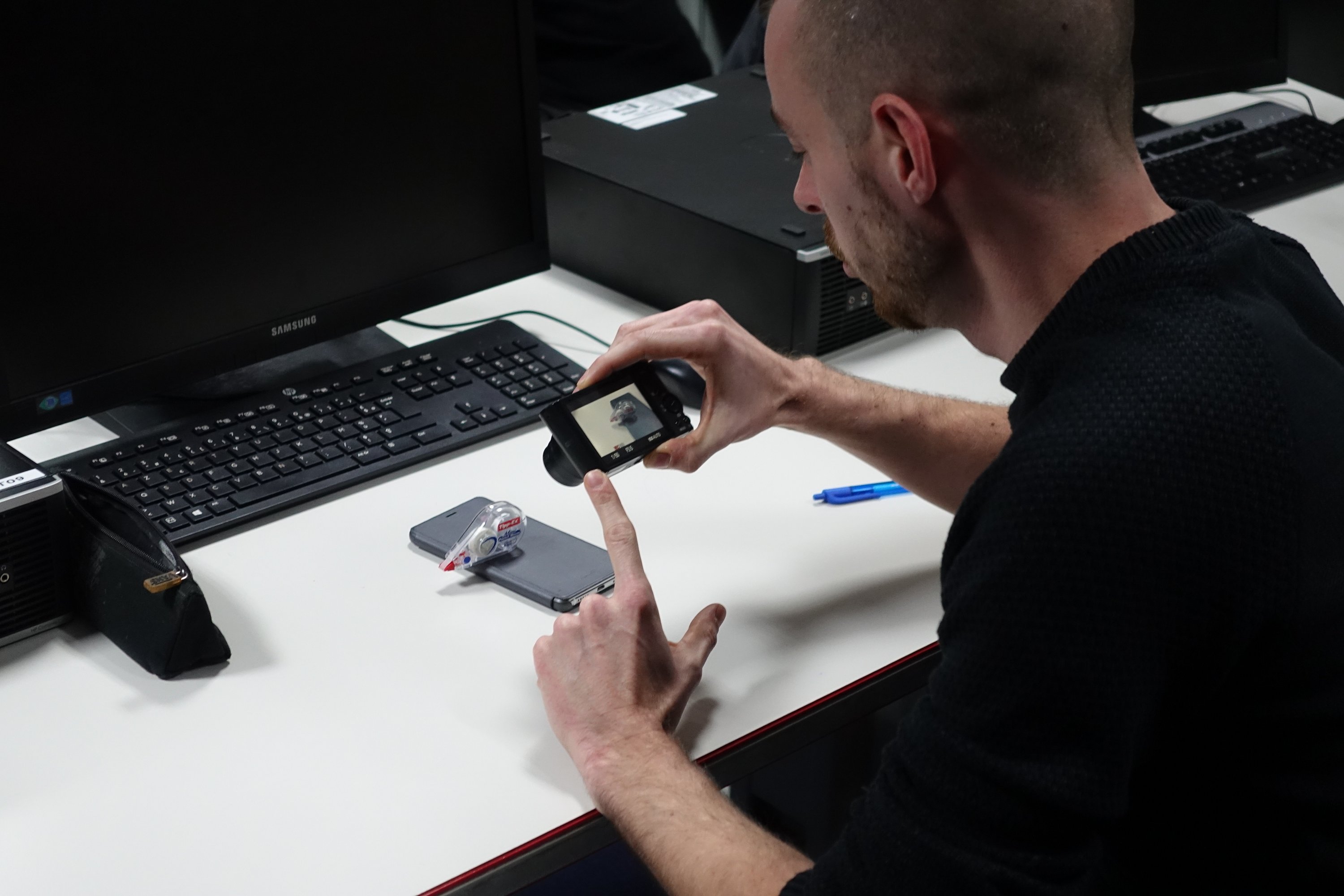
When we speak of a frame, we often think of what contains and what forbids. This understanding is partial. In the analytic cure as in mediation work, the frame is not first what prevents overflow. It is what makes expression possible. The whole stake of the mediation profession rests on this distinction.
The confusion between frame and discipline
When people say “we need a frame,” they often mean: we need rules, we need limits. The frame would then be what prevents overflow, what protects by containing. This view is not wrong, but it is incomplete. It reduces the frame to its defensive function and forgets its principal function, which is, to my mind, of another order: the frame is what makes expression possible, what authorizes.
The purest example of this is the analytic cure. There the frame is strict: the couch, the fixed time, the duration of sessions, the regular frequency, the payment. None of this constrains the analysand. This whole arrangement builds the conditions for a speech that cannot take place anywhere else. But what the frame makes possible is not only the saying of unusual things. It is the possibility of addressing them to someone. What Sigmund Freud named transference designates the movement by which the analysand invests in the analyst what they have invested in earlier figures. Jacques Lacan reformulated this intuition by speaking of the subject supposed to know: the analyst becomes the one to whom a speech is addressed, carried by the supposition that they know something about me. Without this address, speaking would produce nothing. It is the address, sustained by the reliability of the frame, that changes everything.
Donald Winnicott, paediatrician and psychoanalyst, proposed the notion of holding to describe this function of the environment: the capacity of the environment to carry the subject so that the subject can come into being. The good enough mother, says Winnicott, is not the one who controls everything. She is the one who adjusts to the child’s needs while leaving them the space of creative illusion. She is reliable enough that the child can explore the world without fearing collapse, and discreet enough that the child can exist without being saturated by her presence.
In the field of mediation, this means that the frame carries people rather than monitoring them. For people to feel safe enough to risk creating, the frame must be reliable and authorizing, and its spatial and relational configuration must say: here, you are allowed.
Space as frame
Space is a constitutive element of the frame. The physical place where a workshop takes place is not a logistical detail. How we are arranged in relation to one another, by which path we enter the room, where we sit, what we have at hand when we begin to speak or to create, which objects occupy the space: all of this composes a scenography that is already an act of mediation. If I propose a video workshop in a room where the chairs are aligned as in a classroom, I summon a school posture. If I arrange the chairs in a circle, or if there are none at all, I invite something else. The gesture of arrangement is never neutral.
When I arrive at a venue to set up a workshop, I sometimes spend two hours preparing the space. This is not perfectionism: the space that people will enter will condition their experience. In a day hospital for autistic children, the usual common room becomes transformed when the children come in; their everyday place has become something else. The same gesture matters in many contexts: a day shelter for homeless people, the lobby of a museum converted into a workshop space, the common room of a residence for people in addiction recovery, a classroom entirely rethought for a creative session. Each time, the same principle: when a familiar place is inhabited differently, the relations that unfold there can also be different.
The size of the viewing screen is a question I take very much to heart. A screen that is too small reduces the power of the image, which becomes trivial. A large screen gives the image a presence in the space, and therefore in the minds. The trade-off is not so simple: if complete darkness cannot be achieved in the venue, the larger the screen, the less luminous the image. One has to find a balance, to make tests, to move around the room to feel physically what the image produces there. This preparation by trial and error is part of the work of welcome. The scenography of the activity is part of the activity.
In a place of daily life, transforming the space carries a particular weight. When one day the common room is arranged otherwise, when there are musical instruments, felt-tip pens, coloured paper, a camera, scissors, technical objects, the people who walk in receive a message before anything has been said to them. This message comes from the space itself: something has been prepared, so something unusual can happen.
This preparation is an act of care. To prepare a place for welcoming is to take care of people before they are even there. The energy deposited in the arrangement, in the choice of objects, in the attention paid to the layout, is not lost. It is perceptible. It travels along a path that does not require the participants’ clear awareness, in the details that no one will ever name, and it immediately modifies the quality of the bonds between the people who arrive. When a place has been inhabited with care, those who enter it feel welcomed without having been told so. This quality of hospitality is what makes expression possible, because expression is always a taking of risk, and one only takes a risk where one feels carried.
This dimension of spatial care has been worked on by several traditions. Jacques Derrida, in his texts on hospitality, has shown that welcoming the other begins by preparing a place for that other, even before they arrive. The architect Patrick Bouchain has made hospitality a principle of his work: the quality of a place is measured by how it makes its habitability visible, by how it offers handles rather than imposing uses. Ergonomics, experience design, cultural urbanism work on the same intuition: the material arrangement of things produces, in bodies and in bonds, effects that are not incidental.
The object has a very particular function here. An object placed on the table, that one can pick up, does not lie. It is not a subject, and it will not betray. This inertia of the object is precious, because it allows an immediate trust, where the human relation requires time. In direct contact between people, much information passes at once, and it is not unusual for participants to fear being manipulated or judged. The relation to an object does not pose this problem. The object belongs to the one who holds it, it will not be deceitful, it does what the gesture asks of it. When each person can take hold of an object as they wish, choose one instrument rather than another, pick up a felt-tip pen, handle a device, each person anchors a first trust in what they can do. It is only from this trust anchored in the relation to objects that people can then meet one another and cooperate.
The object acts as a third party. It interposes a matter between subjects and allows the encounter to take place without the immediate frontality of the face-to-face. The diversity of the objects offered is itself important: it allows each person to find a singular handle, depending on their sensibility, their history, their mood of the day. A place that offers only one kind of object imposes only one way of being. An inclusive place, on the contrary, authorizes different modes of engagement, and this is the condition for a heterogeneous group to find its place there.
Building the institution together
There is a gesture that extends this attention paid to space: building the frame with the people themselves. The arrangement is not only prepared in advance. A part can be, and sometimes must be, fabricated in the presence of the participants.
These two dimensions decline one into the other. A frame can already be set up, which is itself an act of hospitality, and at the same time leave a part to be built collectively. This is often even desirable: what is already there carries the people, what is left to do engages them. The balance between the two is itself a methodological question.
Before going further, we need to clarify what we mean by institution. The word, in its current usage, designates established structures: school, hospital, the State. In the tradition of institutional psychotherapy and institutional pedagogy, the word takes on another meaning. An institution is not a building or a fixed organization. It is the set of rules, roles, times, places and objects that people make and remake together in order to live, to care, to learn. The institution, in this sense, is a process. This is why we can speak of an institution of the moment: the ephemeral institution that a group gives itself for the duration of a workshop.
This intuition comes from two brothers. Jean Oury, psychiatrist, founder in 1953 of the La Borde clinic, elaborated what is called institutional psychotherapy. His central thesis is that what heals in a place of care is not only the individual therapeutic relation. It is the quality of the institution as a whole. One must therefore care for the institution itself, that is, work on the rules, the roles, the spaces, the rhythms, with everyone involved, caregivers and patients alike. Fernand Oury, his brother, a primary school teacher, transposed this intuition into the school field with institutional pedagogy, in the wake of Célestin Freinet’s work. In an institutional classroom, children take part in fabricating the rules and devices: the “What’s new” circle, the cooperative council, behaviour belts, the class journal. These devices are not peripheral pedagogical tools, they are full-fledged institutions, fabricated by the children with the teacher, and they structure their collective life.
What these two practices share is the wager that the collective fabrication of the frame has a subjectivating reach. To take part in creating the institution in which one lives allows one to stop being only its object and become also its subject. This is a major shift: moving from a passive position (I am inside a frame that others have decided for me) to an active position (I have contributed to fabricating the frame I am in). Cornelius Castoriadis, in The Imaginary Institution of Society, named instituting imaginary this capacity, individual and collective, to institute something new in the order of things. It is this capacity that the shared building of the frame solicits.
When a group arranges chairs together in front of a screen, decides who sits where, how the equipment is shared, what rules govern speaking turns, several psychic operations come into play. Symbolization, by which a material gesture becomes the bearer of shared meaning. Appropriation, by which a foreign environment becomes a little mine. Mutual recognition, by which each person exists in the eyes of the others as a member of the collective. Moving a chair is also a symbolic act: I mark a place there, I accept the place of the others, I take part in the decision that defines the space of our encounter. These psychic processes are at the heart of mediation work.
The frame against fear
When the frame is well thought out, when it is clear, reliable, authorizing, people take risks. They dare to do things they would not dare otherwise. When the frame is blurred, when the rules are contradictory, when the practitioner is themselves anxious, people retract and do the minimum. Retraction is not a personal choice.
It is not a question of will. When the brain structures that regulate emotion detect a threat, even a symbolic one, they inhibit part of the cognitive functions necessary for learning and expression. Olivier Houdé, in his work on cognitive development and inhibition, has shown that thinking and learning rest on an executive system that anxiety can disarm. A mental operation that one performs without difficulty in confidence becomes impossible under stress. The person who retracts can no longer do otherwise.
The risk that feeds this anxiety is also a social risk. To express oneself is to expose oneself to the group’s judgment. Now, expressing oneself in a creative situation is a particular kind of exposure, because I do not know myself what is going to come out of me. All creation engages layers of experience that I had not anticipated. I venture forward without knowing what others will see in it. This ignorance of what I am about to show is what makes creation vertiginous. To be judged on what one does not know about oneself can lead to being rejected from the group, which from a sociological perspective amounts to a risk of symbolic exclusion. And social exclusion, as clinical experience confirms, is experienced by the organism as a vital threat. The anxiety is on the scale of this stake, and it can only be defused by the material and symbolic conditions of a reliable frame.
The frame that authorizes signals, to the person who advances into the uncertainty of their own expression, that this advance will not be sanctioned by rejection. It signals that the group, the place, the facilitator, are there to welcome whatever comes out, whatever it may be. This guarantee, more than any encouraging discourse, makes creative risk-taking possible.
Holding the frame: the facilitator’s posture
To understand that fear inhibits and that the frame reassures is not enough. The methodological question remains: how, concretely, does one make a frame hold? What are the competencies proper to the facilitator that make a frame liveable?
Working on the frame is first of all working on oneself. If I am anxious about the equipment, about the time, about what people might do, this anxiety transmits itself. It passes into the way I organize the space, into the instructions I give, into the micro-gestures of control I perform without noticing. People sense it. What public health calls life skills (the psychosocial competencies formalized by the World Health Organization in 1993: self-awareness, stress management, empathy, effective communication, emotion regulation, and the others on the list), are not only objectives for the participants. They are first of all competencies at work in the facilitator. The awareness I have of my own tensions, my capacity to regulate them, my way of welcoming the unforeseen, run through the device and condition what can happen in it.
There is a reciprocity between the life skills of the person facilitating and those of the participants. If I work to embody these competencies, I create by that very fact an environment where the participants can exercise them in turn. It is an effect of modelling. It is also an effect of authorization: one does not authorize in others what one does not authorize in oneself.
A few concrete methodological proposals follow. Arriving well in advance, in order to have time to prepare the space without being rushed; this margin of time is also a psychic margin for oneself. Checking the equipment, making the adjustments, sitting for a moment in the place where the participants will sit, to feel what they will feel. Preparing instructions that are clear but open: the goal is not to direct what will come out, it is to make it possible that something will come out. Announcing how the time will unfold: how long we have, what we will do, when, how it will end. Knowing the time that remains liberates, because it dispenses one from having to monitor it. And not hiding that one is improvising part of it: transparency about what one knows and what one is discovering oneself is another form of reliability.
The frame that authorizes thus presupposes a facilitator who authorizes themselves. Who authorizes themselves to let things happen and to welcome the unforeseen. This is no doubt the most difficult thing, because we have been trained to master and to anticipate. To let go of this control is an act of trust, in the device and in the people. This trust is not invented in the moment. It is built through the quality of preparation and through the work on oneself that each workshop engages.
Cultural rights, in epilogue
All of the above builds, in practice, what can be called cultural democracy. We still need to clarify what this means, and why this practice has a solid juridical and philosophical foundation in cultural rights.
Cultural rights rest on an anthropological definition of culture. Culture, in this sense, is not the culture of the Ministry of Culture, that is, a sector of activity gathering works, artists and institutions of diffusion. It is what constitutes each person in their existence: what they eat, the language they speak, the stories they heard as a child, where their ancestors come from, where they live, what they like to watch on television or on the internet, what they listen to, what they tell. All these practices, without official cultural legitimacy, are nonetheless for each person the substrate from which it becomes possible to symbolize, to think, to create bonds, and possibly to enter the culture in the restricted sense, that of shared artistic creation.
This is what is established by the Universal Declaration of Human Rights of 1948, the Fribourg Declaration of 2007, and now French law, particularly the NOTRe Act of 2015 and the LCAP Act of 2016. Each person has the right to take part in cultural life, to practise their own culture, to see their culture recognized. The logic shifts: we move from cultural democratization, which consists in bringing to people a culture deemed superior, to cultural democracy, which recognizes the legitimacy of all cultural practices and aims to create the conditions for their encounter.
For mediation work, the stake of this shift is very concrete. If a person has never seen their own culture recognized, if they have always been told that what they liked, what they knew, what they thought was not legitimate, they will not grant themselves the value necessary to take part in the life of the city. They will not authorize themselves to symbolize, to take the floor, to create. Recognition by others is what makes possible the recognition of oneself by oneself, and it is this recognition of oneself that makes possible engagement in the common. Without it, there is no full citizenship; there is only a formal participation that does not engage the subject.
To put cultural rights into practice, in mediation work, is therefore first of all this: to recognize what each person brings with them, and to create the material and symbolic conditions for this contribution to unfold. The frame that authorizes does not prescribe a form or a level of quality. It creates the conditions for each person, on the basis of their own culture and their own sensibility, to express themselves and to be recognized in that expression.
By way of synthesis
To express oneself and to be recognized in one’s expression is not an amenity. It is that by which a subject builds itself, in the same movement, psychically and socially. Psychosociology, from Kurt Lewin’s pioneering work on group dynamics and Jacob Moreno’s work on sociodramas, through to contemporary research on recognition, has shown that the psychic and the social are not separate, they fabricate one another. I become what I am in the gaze that others lay on what I have to say. I can in turn offer others a gaze that builds them. What is at stake in the smallest mediation workshop, when it is held in a frame that authorizes, is an operation of this order: the joint fabrication of subjects and of a collective.
What precedes can serve as a methodological basis for those who want to transform their practice. The first inversion to be made is conceptual: thinking the frame as what authorizes rather than as what forbids. Once this inversion is made, the work consists in giving this authorization concrete forms. Preparing the space with care, choosing varied objects that will act as a third party, building part of the device together, holding to an announced time, welcoming the unforeseen without dodging it. All these operations require a work on oneself that is not separate from the work on the device: the reliability of the facilitator is the condition of the reliability of the frame. And the whole inscribes itself in a perspective that exceeds the immediate situation of the workshop: what these devices make possible is, on a small scale, a putting into practice of cultural democracy.


