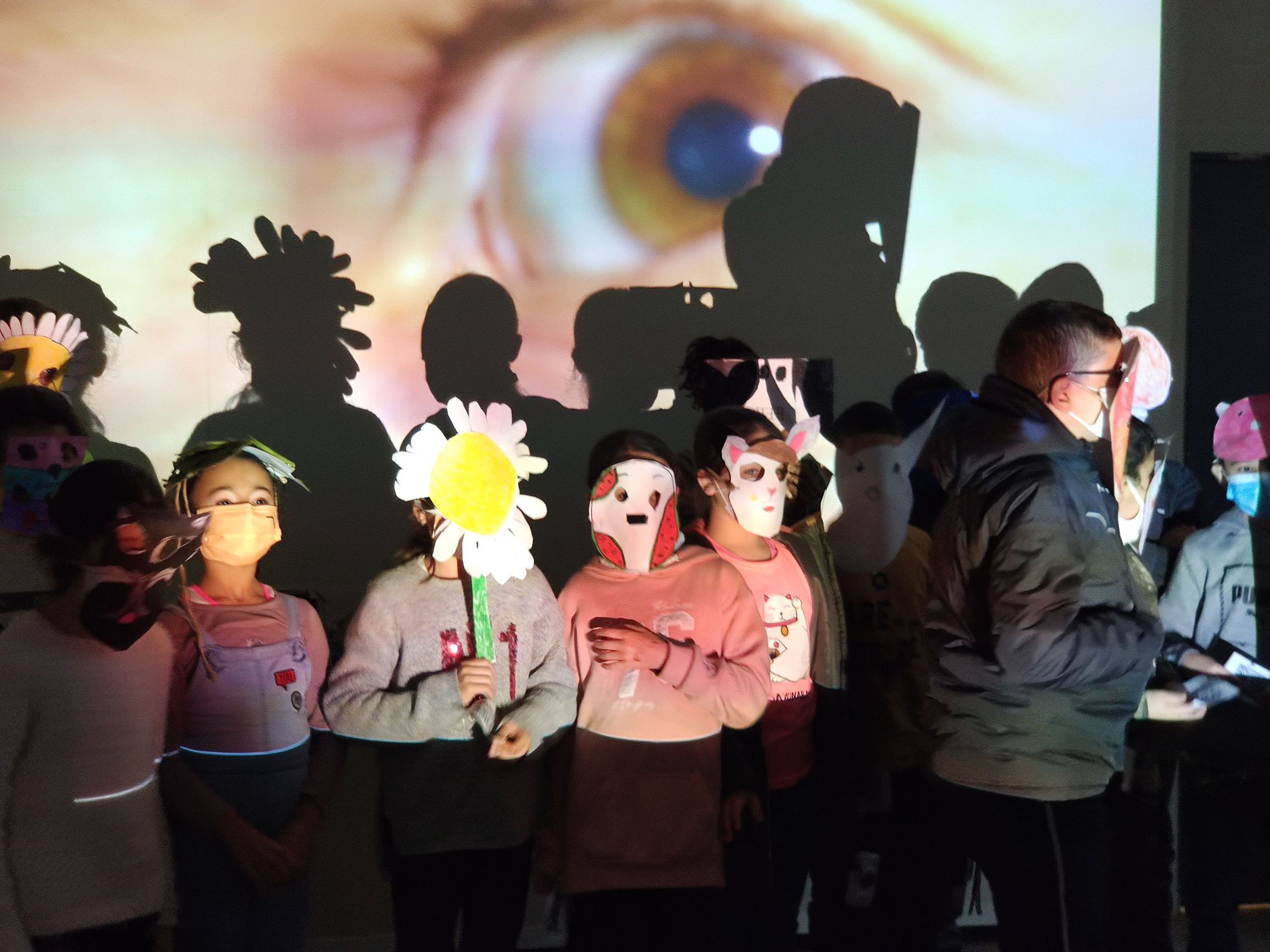
Effective learning is based on free and joyful experience. Play, in the Winnicottian sense, represents creative autonomy rather than mere gamification. Combined with joy, this freedom of experimentation forms the foundation of successful pedagogy.
Experience
Whatever we do, we live an experience. If someone speaks to me or explains things to me, it is an experience that I simply live. Similarly, if I engage in activities, create things, perform calculations, conduct research, or work in a group, these are other lived experiences.
It is through experience that we acquire knowledge, that we build for ourselves. The notion of play can often be misunderstood, confused with gamification—a very naive fantasy that better learning happens when we feel like we’re playing rather than working.
This idea is naive because, on the contrary, children like to work: work gives meaning to life and activity. I would therefore like to clarify what I mean by “play,” which has nothing to do with this notion of gamification.
Joy
In an educational setting, care must be taken to ensure that these experiences are beneficial, that they contribute to the learning of knowledge or skills. To learn better, it is essential that our senses are awakened and that we are happy about the experience we are having. Otherwise, the information and experiences we encounter will be associated with negative emotions, which is obviously not conducive to learning—with the possible exception of learning through trauma, though this is generally not desirable.
Thus, play, which embodies the desire to experiment, along with joy—that supreme positive emotion that fosters confidence—relies on receptivity and openness. These two notions form the basis of effective pedagogy.
Play, Freedom, and Work
I am referring to the concepts of psychoanalyst Donald Winnicott. For him, playing is distinct from the game (the organized activity). Playing is an autonomous, spontaneous, and free activity of transforming the world through manipulation or construction—for example, games like Lego. It is a way for the child to build what Winnicott calls the true self (the authentic self), as opposed to the false self (the self adapted to social demands).
The play I am referring to is autonomy, choice. It is also work, but free work, not commanded labor. According to Winnicott, this playing is always a moment of creativity: not obedience to instructions, but the invention of solutions by oneself, an elaboration—whether graphic, architectural, or even kinetic, as when playing marbles, for example.
For Winnicott, this play takes place in a potential space (also called a transitional area), a space where the child knows they are not worried or judged, and where they therefore have full freedom to invent—and to invent themselves, by daring to play.


