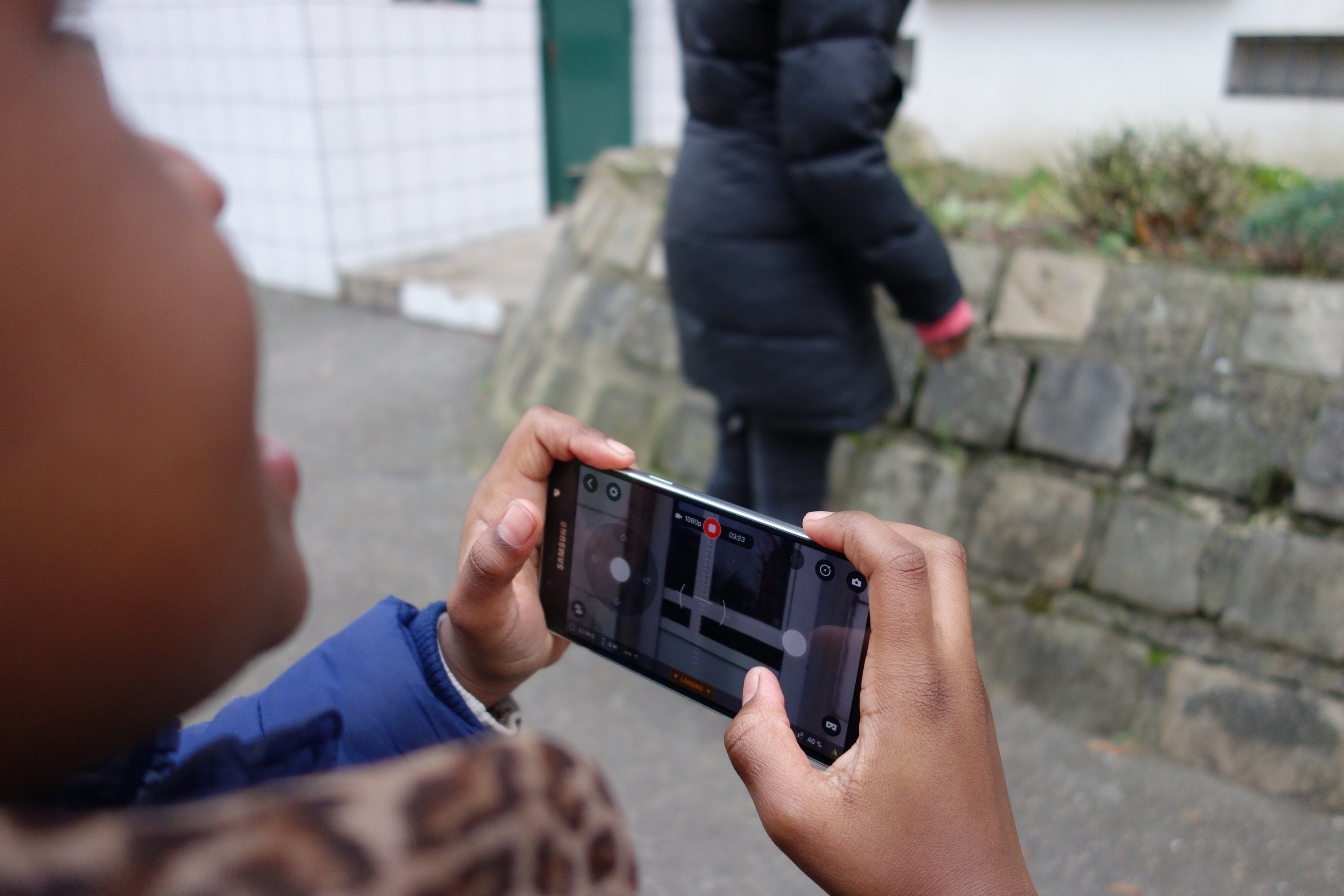
The symbolic third is a concept that may seem very abstract, but for me it is very effective in creating a constructive link, especially between adults and youth. Here is a short synthesis of it, as I understand it.
- In psychoanalysis, to be is to be subject of one’s desire (in the broad sense of the term, desire to live, to learn, etc.).
- As opposed to being object, without desire, forced by someone else to do things. The other may be persuaded that “it’s for our own good,” by the way.
- We project our emotions, our assumptions, our past, our expectations, on the other (on young people, of course, but not only):
- This is called a dual relationship, or an object relationship: the other is the object of our projections.
- As we project onto the other, we are not in contact with the reality of the other, but only with our own projection.
- The link is therefore impossible.
- If we use a “symbolic third party” between us, it is on this third party that the mutual projections will be made (and not on the other):
- Thus, this symbolic third party will allow a relationship between two subjects, that is to say a link between two different realities.
- To give concrete examples, the symbolic third party can be :
- A shrink, on whom we will project our fears, frustrations, etc., which will allow us to return to normal relations with others. We rebuild our capacity to live with otherness, that is to say to be in reality.
- A film, a painting, a show... for which each one is autonomous, and we will discover the other not through our projections on him, but through what the other will have produced. As soon as he has his full and complete autonomy. It is therefore necessary to let go of the power, to trust, by giving the tool fully to the other.
- We have often heard teachers say to artistic contributors: "It’s incredible, thanks to your activity, I discovered this student in a different way! The art facilitator, but especially the object he or she offered to the students to create, acted as a symbolic third party, and re-established the relationship between teacher and student.
- A tool (camera, paintbrush, camera, theater stage, musical instrument...) that one gives to the other, with which he is autonomous, that he will appropriate in a completely different way than mine.
- The symbolic third party thus allows the link between two so different realities! It makes it possible to enter in relation. It makes it possible to be subject, in reality, by accepting that reality and the other escape us, and thus to be enriched in depth, while remaining oneself. This is true for oneself and for the other.


