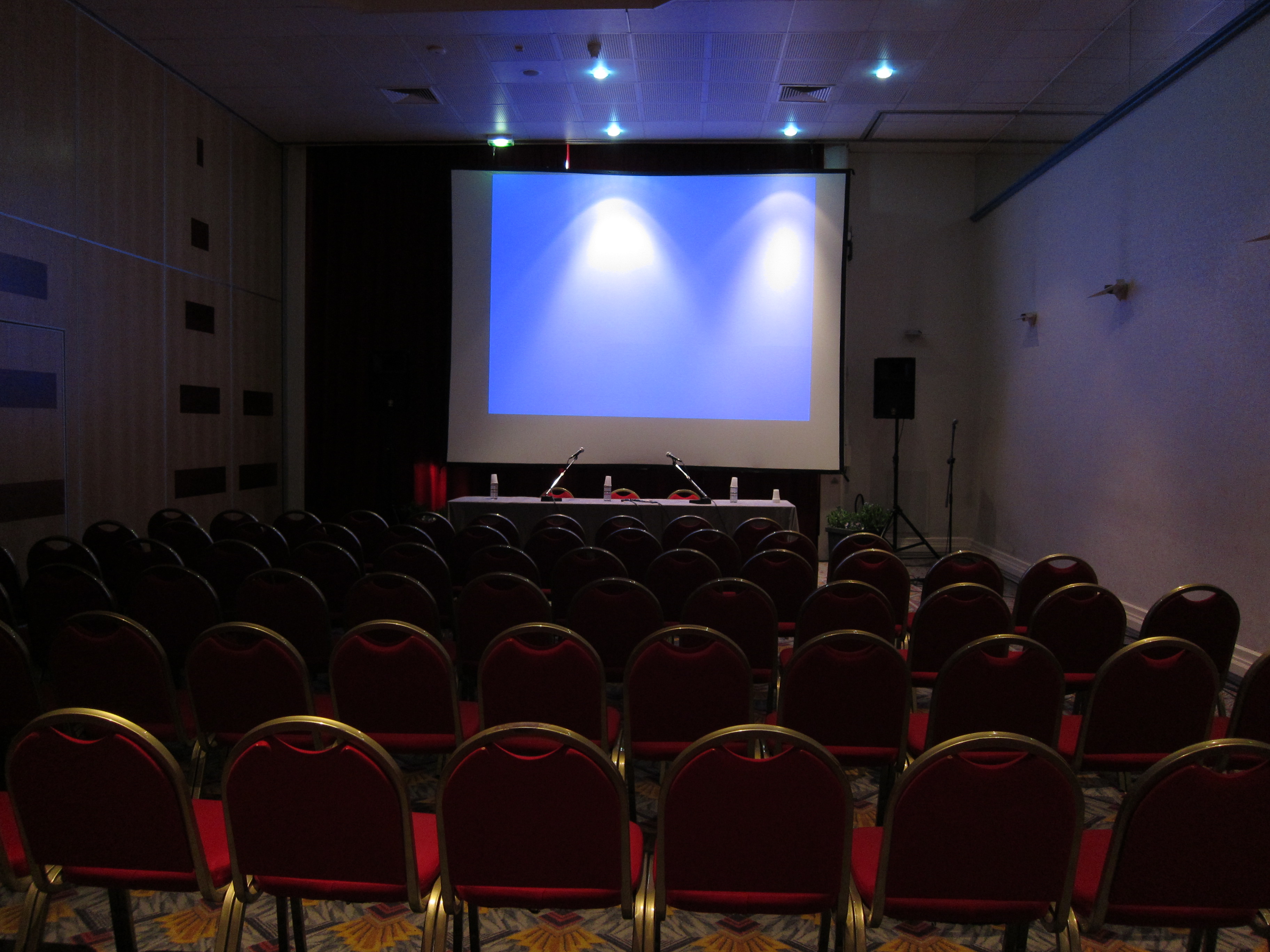
Faced with the impossible dialogue between our divergent world-thoughts, which threatens our identities, a path opens up: building together around a common project.
The impossible dialogue of world-thoughts
In public debates, when someone presents their ideas before an assembly, it frequently happens that others express not only disagreement, but also a form of deep irritation. This emotional reaction stems from a fundamental divergence in value systems. Instead of engaging in constructive dialogue that would allow for genuine exchange, the opponents often propose a radically different conception of the world, where words themselves take on different meanings.
This situation creates a particular complexity: we face an apparent impossibility of dialogue. How can we debate and mutually enrich each other when language itself becomes a source of misunderstanding? Each person remains anchored in their own world-thought, and establishing a common space of presences becomes extremely difficult, even impossible. Each individual carries within them a singular presence, often reinforced by what we now call, though the expression is overused and poorly instrumentalized, confirmation biases. Instead of seeking to broaden their perspective, individuals tend to search in their environment for what validates their existing mode of thinking. These confrontations generate palpable tensions, as uncertainty looms over our ability to dialogue and build together despite our profound differences.
When identity becomes the battlefield
It is crucial to understand that what confronts each other are not simply worldviews, but world-thoughts. A vision would imply the possibility of dialoguing about different framings, about what we choose to look at or ignore. But here, dialogue becomes arduous because we do not think according to the same patterns; we use different languages while apparently speaking the same French language.
Our way of thinking the world constitutes a complex weaving between our singularity, our lived experiences, our cultural references, our influences, our community belongings, our postures and our commitments. This weaving forms our very identity. We think the world in a certain way, and since we are an integral part of it, modifying this thought would amount to shaking our deep identity, our essence, our existence, our foundations, our backbone. This is why we instinctively protect ourselves from alternative thoughts: adopting another way of thinking the world can be experienced as an existential threat. This is not about closed-mindedness, but about identity construction. People who appear rigid in debates are not necessarily closed; they can be very open to discovering otherness. However, a radically different world-thought threatens their deep identity, hence the emotional intensity that characterizes these confrontations.
The lived experience of confrontation
I testify to this reality from personal experience. I have often experienced this blockage in the face of my own world-thought, feeling attacked by different perspectives, particularly when they emanated from authority figures. Faced with these divergences, I constructed forms of antagonism to try to regain power through contestation; it was actually my very existence that was at stake. Although it may seem excessive in the context of simple discussions, our existence can truly be called into question during a verbal exchange. This dynamic explains why some discussions degenerate into violence, sometimes even physical, from a simple verbal disagreement. Conversely, I have also observed reactions of outrage in response to my own propositions of world-thought. People showed themselves shocked, not because I deliberately attacked their convictions, but simply because my thought fundamentally differed from theirs. In a deep and authentic dialogue, this difference can be perceived as existential aggression, even involuntary. Thus are born antagonistic presences and power struggles where each seeks to impose their conception of the world, perceived as absolute truth because it constitutes the prism through which they have always apprehended reality.
Building together: the common object as solution
The dynamic I describe here is obviously not desirable, but it constitutes a necessary starting point to understand how these powerful emotions can hinder collective construction, mutual enrichment and our capacity to give and receive. Faced with this observation, how should we proceed?
First, let us recognize the impossibility of harmonizing world-thoughts. Each will retain their unique and singular perspective. Attempting to debate to standardize our conceptions is futile. The solution lies elsewhere: rather than confronting our thoughts, we must collectively contribute to the creation of a common work, symbolized by a third object, which will be enriched by our diversity.
Let us take the concrete example of building a wall. This collective enterprise mobilizes diverse skills: some make the cement, others dig the foundations, take measurements, stretch the lines to delimit the location, collect stones, cut them or assemble them. Each function potentially corresponds to a particular world-thought. Searching for stones in nature requires a specific perception of the world, a particular sensitivity that not everyone possesses. Similarly, the art of preparing resistant cement, of mastering mixtures, stems from a world-thought totally different from that of the stone collector.
The solution therefore consists in distributing complementary roles according to each person’s aptitudes and world-thoughts. Around this third object, our wall, we organize not competition but a synergy of contributions. This approach allows mutual enrichment while accepting that we will never entirely understand the other, nor they us. Yet, together, we build.
To advance in this construction, dialogue remains necessary, but its object differs. We do not debate the philosophical foundations of our enterprise, each retains their own motivations. Rather, we share a concrete need: to erect a wall to establish the foundations of a future building where we can gather sheltered.
This common need transcends individual world-thoughts. The building exists in all conceptions, even if it does not play the same role in them; its physical reality remains universally shared. Our exchanges, which are no longer impossible “debates of ideas,” then articulate around two axes:
- First, the sharing of motivations: each expresses why they wish to contribute to this construction, why they feel the need for a house rather than something else. These motivations will diverge considerably, but we will welcome them as the multiple facets of a common project.
- Then the practical modalities, not to determine who holds the truth, but to discover each person’s skills and aspirations.
This approach allows us to respect our differences while making us capable of building together.


