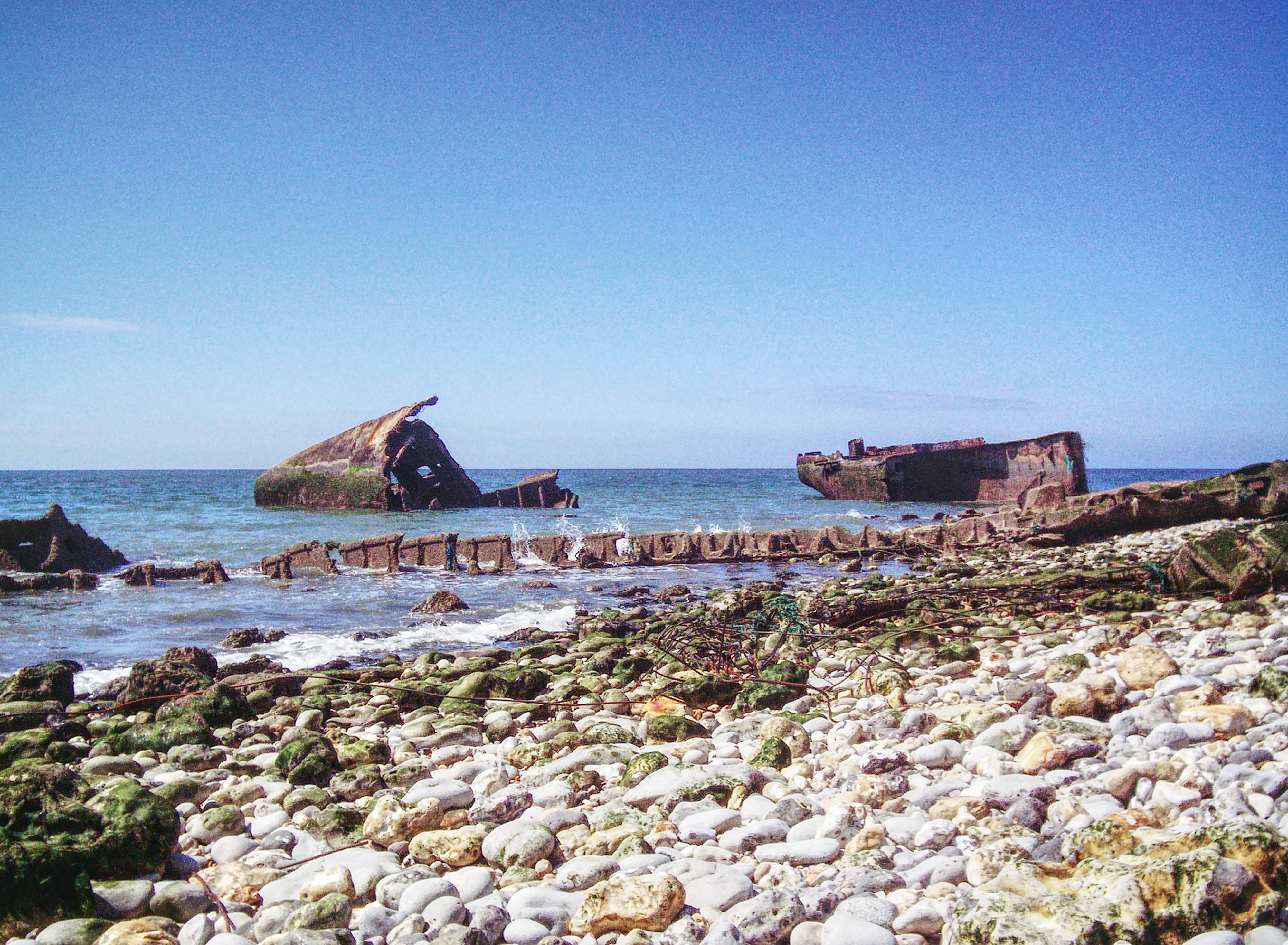
Our presence to ourselves varies depending on context. The concept of a “geography of presence” explains how our inner states transform, intertwine, and influence our choices, forming a complex mapping of our presence in the world—beyond an overly simplistic psychologizing view.
Contextuality of Our Presence
Our presence to ourselves is not of the same nature depending on the contexts in which we find ourselves. At the heart of a noisy protest crowd, or strolling through a quiet spring forest, or sitting at a desk in an open-plan office, or alone in a restroom, or swimming in a public pool, or seated in a movie theater, or at a wedding, or at the funeral of a loved one, or with someone I love during a candlelit dinner, or with someone I despise in a terrible argument… my presence to myself and to the world can be extremely different.
What is this presence to oneself and to the world? It is what is activated within me: perception, a capacity for openness—more or less pronounced—to certain or all facets of who I am and how I am. In my relationship with my surroundings, am I calm, am I beside myself, am I contributing to a purpose in which I feel useful? Am I joyful? Do I feel like I’m living a moment essential to me? Or do I feel like I’m wasting my time? Or that I’m not where I’d like to be? And so on.
Geography of Presence
I propose the concept of a geography of presence, because what I describe here—these completely different experiences of oneself and these facets of oneself that might sometimes feel opposed, depending on the situation—are articulated within a geography, meaning a movement, a circulation between these different places and moments of presence, like a form of cartography of our presence.
If I reunite with someone I love after being in a situation of conflict or extreme tension, I will not be in the same presence with that person as I would if, before seeing them, I had been in a moment of great creative satisfaction, for example. This is why I envision our presence to ourselves and the world in the form of a geography.
I propose this vision because, in my view, it allows us to move beyond an often excessive psychologization of our qualities of presence, which can feel like an over-responsibilization of ourselves for our lived experiences in situations. Taking into account the geography of our inner journeys in relation to external environments and others provides, it seems to me, a more solid foundation for understanding what happens to us.
This almost aligns with common sense. We know, for example, that we need a transition space after an exhausting workday before entering the intimacy of our home with our family. But even this view seems overly simplistic to me. It would assume a form of impermeability and an ability to separate the different spaces of the geography of presence that we traverse.
A geography also has layers. The geography of a territory can be considered from various angles. Maps, for instance, may or may not represent altitudes. Perhaps we’ve all experienced this at some point—back when paper road maps were used for travel—seeing a flat map with routes that seemed fairly short and easy, only to discover while driving that they were actually steep climbs and that the little winding roads were terrifying cliffside paths for long minutes, representing a vital risk that we didn’t perceive at all on the map, where the geography appeared simple because it was viewed through only a single layer.
Reinvesting Our Intentions in Our Geography
I am not saying there are no distinct spaces from one another, but if I propose this concept of a geography of presence, it is in the hope of inviting us to more precise life gestures regarding how we bring together the conditions for our emancipations and our most desirable possible existences. These conditions to assemble—over which we have real capacity for action—are linked to highly varied geographical elements that we propose to ourselves: an impulsive walk down an unexpected path, a reorganization of our living space, a decision to tidy up objects or welcome new ones, the choice (or not) to attend that party with friends.
How can we sense the best way to act upon our geography of presence? How can we be sure that this incongruous and perhaps almost incoherent choice we make—to do one thing rather than another—how can we determine what is good for us from what is not? In short, how do we listen to ourselves in making lucid, conscious, free, and beneficial choices? What criteria should we apply? And how do we perceive these criteria in the moment?
There is obviously no ready-made answer to this question because it is fully contextual. And within the same context, two inspirations can be equally good even if they produce perfectly opposite consequences. But we can also, at times, make choices that are clearly not beneficial for us.
To progress in lucidity on this subject, I believe that if we envision our presence in a geographical form, it can only nourish a more just and open engagement with the world.


