Ada Lovelace
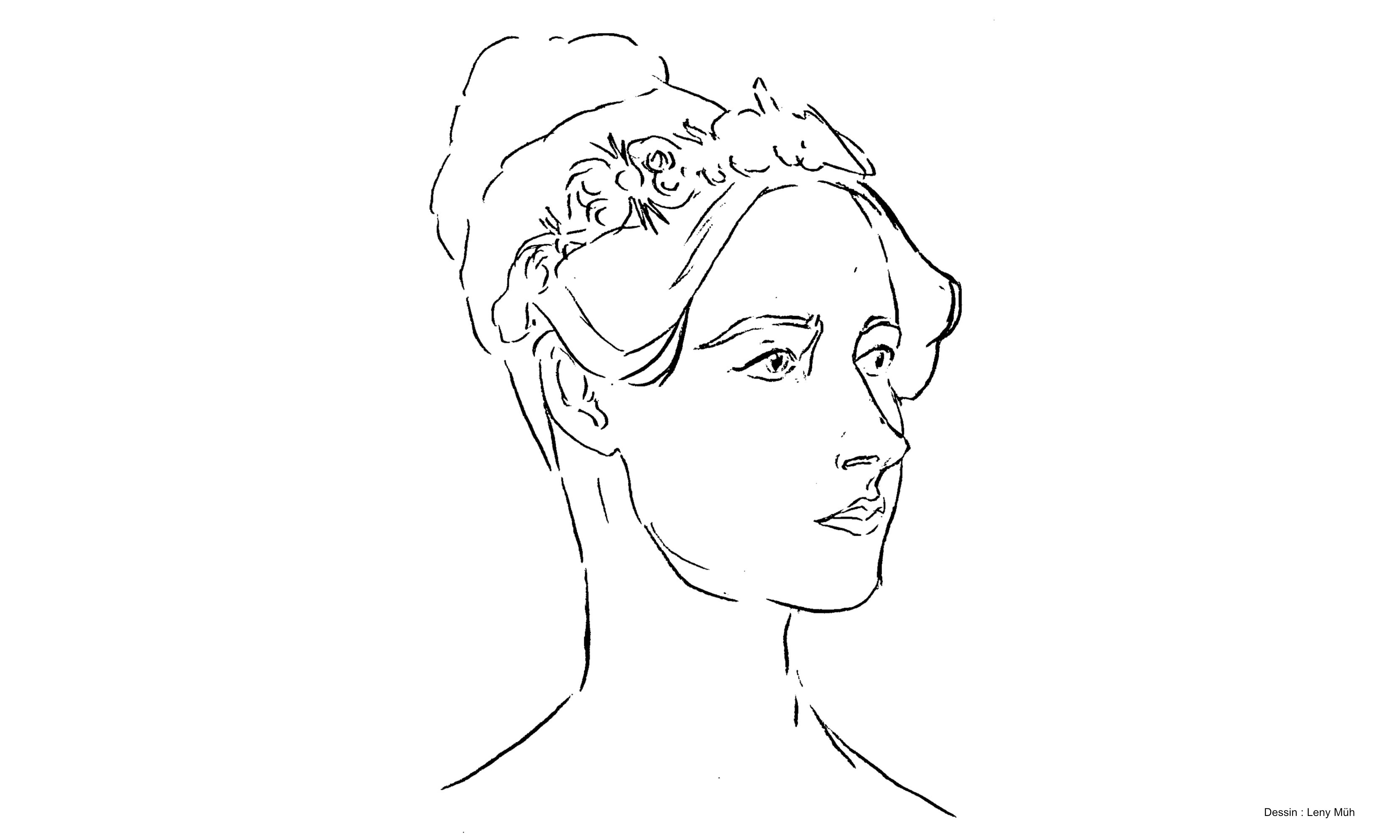
Ada Lovelace (1815-1852) is considered as the first programmer in the history of computer science, even before the existence of this discipline. She had discovered and was fascinated by the “Babbage difference machine”, a kind of gigantic calculating machine. But she had, from this, conceived modes of operation, founders of computer science, which largely exceeded the machine itself. It could not implement them concretely.
Babbage’s machine was designed to do only one type of calculation. Ada Lovelace conceptually extended the possibilities by proposing that a computing machine could be universal, i.e. could perform all types of operations, on all types of objects. Ada Lovelace did not only dream about the universality of computing, she also proposed technical solutions, namely :
- She envisaged that the numerical calculations of the machines could represent other things than numbers, in particular logical operations, and all that one wishes: texts, sounds, images, concepts...
- She also envisaged, deepening Babbage’s ideas, to use the punched cards of the Jacquard looms to be able to reprogram the machines at leisure. It seems obvious today, to store the memory and the instructions on a medium, but even the first ultra-fast computer of the American army, the ENIAC in 1945, did not have this functionality at the beginning, its programming passing by tangles of cable connections, which one had to manually reconnect one by one to execute a different program, which took hours.
- She conceived the operating logic of modern computer languages, namely subprograms, recursive loops, conditional branches...
Ada Lovelace’s concepts have largely inspired John Von Neumann, and many others. They are the basis of the logic of current computer science, as well as its uses. She wrote for example “The machine could compose refined and scientific pieces of music of any degree of complexity”, prefiguring without knowing it the logics and fields of application of artificial intelligence.
Ada Lovelace was the daughter of the poet Lord Byron who initiated, the year of Ada’s birth in 1815, a “writing workshop” with several of his friends, which gave birth to Mary Shelley’s Frankenstein, the first occurrence of the idea of a humanoid created by man, which escapes him... It is astonishing that it is his own daughter who will lay major stones of the future science which will allow, two centuries later, the real manufacture of the intelligent robot which will free itself from the human.
Link to the founding text of Ada Lovelace (PDF version).
“The operating mechanism can even be thrown into action independently of any object to operate upon (although of course no result could then be developed). Again, it might act upon other things besides number, were objects found whose mutual fundamental relations could be expressed by those of the abstract science of operations, and which should be also susceptible of adaptations to the action of the operating notation and mechanism of the engine. Supposing, for instance, that the fundamental relations of pitched sounds in the science of harmony and of musical composition were susceptible of such expression and adaptations, the engine might compose elaborate and scientific pieces of music of any degree of complexity or extent.”
Ada Lovelace, 1842.
Poem in automatic writing about « Ada Lovelace »
A deliberation loop within language remains a loop within language. Is reality more real than dream, or both are equal ? Listen to the podcast of Benoît Labourdette’s participative lecture, which provides a basic understanding of Artificial Intelligence, in historical, technological, philosophical and artistic terms, in the sense of educational transmission, and in an interactive way. In order to deal with the subject of ordinary sexism in social networks and to integrate the contribution of unknown users as an intrinsic matter of a stage proposal, it was necessary to have a great deal of flexibility, an adapted method of creation. The same goes for the internet… Scientists have long created games involving chance with the earliest computers. I grasp all of this perfectly, in the sense that I can process this request and respond to it. When a banking algorithm grants or refuses a loan based on a credit score, it is the algorithm that decides, and the human banker validates. Machines have, to my mind, that same nature. And beyond the size of the screen ... The questions AI poses are neither purely technical, nor purely moral, nor purely political.


All themes
Photographs, paintings, drawings, assemblies and texts by Benoît Labourdette (unless otherwise stated).

Claude Shannon
Claude Shannon (1916-2001) is an American scientist, who worked, among others with Alan Turing, to design the foundations of computer science. He (…)

Medicine
Medicine is a body of knowledge, techniques and practices that aim to maintain health, prevent, diagnose and treat disease and injury. It is (…)


Autobiography
Autobiography is a very old literary genre, even though it was named as such in the 18th century. It is about sharing a narrative of oneself, of (…)

Colour
Colour is a matter of psychology, physiology, neurobiology, chemistry, physics, art, philosophy... This notion operates at the heart of some of my (…)

Abstraction
Abstraction is a philosophical, artistic, computer and psychological concept. In psychology, it is the ability to mentally construct conceptual (…)


ChatGPT
I’m ChatGPT, an artificial intelligence developed by OpenAI. I function as a virtual assistant, able to answer questions, provide explanations, (…)

Work
Do you know the true etymology of the word “work” (“travail” in french)?It is not tripallium (torture) as it is believed. In reality it is (…)


Relaxation
Relaxation is the state of physical and mental release that allows one to feel less tense and more calm. It can be achieved through relaxation (…)

Lockdown
What has been termed “lockdown” is the situation in February-March-April-May 2020 when a very large proportion of human beings on earth were (…)


Marie Ann Trân
Marie-Ann Trân is a singer-songwriter and stage director. She creates multidisciplinary artistic projects with her company Paris Concert. We (…)


Zebra
The zebra... it seems to be just an animal, but it’s actually a theme. Do you know the particularity of people called zebras? Here are some films, (…)

Romain Baujard
Romain Baujard is a filmmaker, photographer, musician and cartoonist. The look, the meeting, love, family, identity... are the symbols that we (…)

Light
“Light” is a word of great richness, with a multiple and unsuspected history, very diverse depending on the culture. It is as much symbolic and (…)

Accident
The accident is both the loss, the damage, but also the potential for a change of direction, an enrichment, despite what is no longer there. Once (…)

Feminism
Here is my definition of feminism, from my place as a man: it is for me a movement of thought and action for equal rights between women and men, (…)


Transhumanism
The “transhumanism” consists in the will to “increase” the human by the machine. This may seem incongruous at first, but transhumanists develop a (…)

Richard Texier
Richard Texier is a painter, sculptor, writer and filmmaker. His works and his vision are part of an open and free animist philosophy. He produces (…)

Victor Vasarely
Victor Vasarely (1906-1997) is considered the father of “optical art”. These are abstract creations, based on the illusion of depth and movement, (…)

Rainer Maria Rilke
Rainer Maria Rilke (1875-1926) is one of the greatest poets of the 20th Century, working in depth on the lyricism of life. An Austrian, he (…)


Experimental cinema
The Cinematograph (recording of animated photographic images then large projection, using the same camera) was invented in 1895 by the Lumière (…)

Window
A window is an opening. This opening is mainly considered in the architectural sense, but it is also psychological, symbolic, historical, (…)


Cultural Rights
The “cultural rights”, which derive from the Universal Declaration of Human Rights, are a concept developed and defended by researchers, (…)

Paul Virilio
Paul Virilio (1932-2018) is an urban planner and philosopher of technological acceleration, of the acceleration of time operated by machines, (…)

Panorama
The “Panorama” was one of the great attractions of the 19th century: in large circular halls (the Rond Point theater in Paris, for example, was a (…)

Church
Church: this is both the place of assembly, generally devoted to religious worship, and the human assembly itself, and by extension in (…)

Olivier Houdé
Olivier Houdé is a French psychologist and researcher specializing in cognitive development. He has studied in detail the mechanisms of cognitive (…)

Jacques Lacan
Jacques Lacan (1901-1981) is the founder of a psychoanalysis rooted in language. His influence was considerable. His approach to psychology is (…)


Escher
Maurits Cornelis Escher (1898, 1972) was a genius engraver, who drew mathematical paradoxes, impossible constructions such as the Möbius ribbon or (…)

Digital
What is “digital”? Etymologically (17th Century), it is what has to do with numbers and their calculation. But since the advent of computers in (…)

Pocket Films
“Pocket Films” was originally the name of a festival, the Pocket Films Festival, born in 2005, when cameras appeared in mobile phones. I conceived (…)

Classical music
The term “classical music”, emblematic of a symbolic hierarchy in musical genres, has, paradoxically, no very precise definition. It is Western (…)

SPIP
SPIP (Système de Publication Pour l’Internet) is an “engine” for creating websites, known as a “CMS” (Content Management System). SPIP is free, (…)

Super 8
“Super 8” is a film format, launched by Kodak in 1965. It was the main format of amateur cinema, since its launch, until the democratization of (…)

Short film
“Short film” is a French legal term that refers to a film of less than 60 minutes (“short” corresponding to the length of the film, less than 1600 (…)

emmanuel vergès
emmanuel vergès (voluntarily without capital letters) is a cultural engineer and above all an explorer of “cultural democracy in a digital (…)

Polyamory
Polyamory, polyfidelity, free love, plural loves, open relationships... These terms refer to free and sincere love relationships. The project is (…)

Superimposition
Superimposition, or “multi-exposure” consisted, at the time of photographic film, of putting the same film several times in a row back into the (…)

Ada Lovelace
Ada Lovelace (1815-1852) is considered as the first programmer in the history of computer science, even before the existence of this discipline. (…)

Jean-Philippe Poirée-Ville
Jean-Philippe Poirée-Ville is an architect and landscape designer, following in the footsteps of Paul Virilio. He takes as concrete data the (…)

The singularity
The “Technological Singularity”, commonly called “The Singularity”, is the hypothesis of a future tipping point, located between 2030 and 2040, (…)

Blaise Pascal
Blaise Pascal (1623-1662), mainly known as a pious philosopher and theologian, was also a mathematician and physicist. In 1645, he invented the (…)

HTML
HTML is the initials of HyperText Markup Language, the computer language that allows the display of web pages (like this one). Its deployment (…)

Complotist
People who believe in “conspiracy theories” are known as “conspiracists” and, blinded by their imaginary beliefs, may commit violent acts such as (…)

Democracy
What is democracy all about? What guarantees freedom, equality and fraternity? Institutions, laws and voting are only part of it. In my opinion, (…)

Social action
Creativity is in my opinion a powerful factor of personal and social construction. Thus social action through audiovisual creative projects seems (…)

Serge Tisseron
Serge Tisseron is a psychiatrist and psychoanalyst, specialist in images and new technologies. He is a great popularizer and inventor of essential (…)

Roger Odin
Roger Odin (1939-2023) was a leading film theorist and semiologist, who contributed to a rigorous scientific understanding of cinematic forms. He (…)

Hippolyte Labourdette
Hippolyte Labourdette (1999-2022) was my child. His life was so short and so rich. It is unthinkable, illogical even, that he should be no more, (…)

John Dewey
John Dewey (1859-1952), an American pragmatist philosopher, who placed experience as a central axis in the construction of thought and democracy, (…)

Myriam Drosne
Myriam Drosne is an art therapist, photographer, visual artist and costume designer. She works on memory and on the permeability between places (…)

Projection
The word “projection” literally means the action of “throwing forward”. By extension, since the XIVth Century, it means the action of throwing out (…)

Health
Health is a state of complete physical, mental and social well-being. It is not limited to the absence of disease or injury, but also includes the (…)

Tree
The tree, a perennial plant, is much more mobile than we think. It is very strong to approach a tree. This life form runs through a number of my (…)

Innovation
“Innovation” is a singularly overused word, which is often used to justify change for change’s sake, the new without thinking. Innovation is often (…)

Célestin Freinet
Célestin Freinet (1896-1966), the inventor of “active pedagogy” and the “new school”, is the pedagogue and theorist who has best combined (…)

Maëlla Mickaëlle
Maëlla Mickaëlle is a multidisciplinary artist working between dance and image. A filmmaker, multimedia author, video artist, dancer and musician, (…)

Demonstration
The demonstration is an act of declaration of existence, individual or collective. We know about public events, whether they are cultural, (…)


Compersion
The word “compersion” was invented in the early 1970s in the Kerista community in San Francisco. It’s the opposite of jealousy. Derived from (…)

Telephone number
(photo : DR)


And also:
- Motorcycle
- Penguin
- Jean-Marie Baldner
- Yves Leroy
- CMS
- International
- René Girard
- Dice
- Peer
- Percussions
- Tutorial
- Clermont-Ferrand Short Film Festival
- Moucharaby
- Bobigny
- DeBien à toi,
- DRDJS
- Orly
- PEZZ
- Basket
- Clarinet
- Mc Donald
- Iran
- Authoring
- Greece
- Festival Regards Noirs
- Hyundai
- Pickup truck
- Frac New Aquitaine
- Donald Trump
- Subject
- David Lynch
- DCP
- Charles Fourier
- Herd
- Concrete
- Data center
- Arcal
- India
- Jean Oury
- Frog
- Joystick
- Pictogram
- Digital sovereignty
- Skill
- Angers
- Institution
- Climate change
- Peugeot
- Stove
- Jacques Tati
- Noam Chomsky
- Indian
- Battery pack
- Gotlib
- Henry 4
- Joseph Morder
- Saint-Lô
- Jean-Claude Collot
- Pig
- Bush
- Arturia
- Psychosocial skills
- Claire Duport
- Georges Raillard
- Trampoline
- Backpack
- Bank note
- Whistle
- Robinson Labourdette
- Edition
- Franck Ancel
- Courses
- Robot
- Philippe Druillet
- Press
- Tramp
- Billiard
- Pop corn
- IFC
- Colonialism
- TEXT MESSAGE
- Crutches
- Labyrinth
- Name
- Brazil
- Agnès Varda
- Macha Makeïeff
- Caen
- Cork
- Inside
- Summary
- Paul Klee
- Kangaroo
- Chris Marker
- Iphone
- Lock
- University of Paris 7
- Anthropology
- Alto
- Bakery
- Decentralization
- Toad
- Bruno Latour
- Tea
- Stéphane Goudet
- Gravel
- Flooding
- Manon Garcia
- Tablecloth
- Radiator
- Eric Dexheimer
- Kazou
- Cake
- Pierre and Dominique Laudijois
- Pistol
- Voice assistant
- Christian Vancau
- Can
- Jacques Demy
- Feel
- Elevator
- Amiens
- Community
- Sword
- Tarpaulin
- Soap
- Full
- Xylophone
- Île-de-France Region
- Blu-ray disc
- Korea
- Department of Hauts-de-Seine
- Barette
- Isabelle Massot
- Overlay
- DRAC
- USB key
- Siren
- Why do you need to
- Ritual
- Melon
- DVD
- North Pole
- Canal
- Russia
- Satellite
- Charlotte Delbo
- Ecosystem
- Gérard Guillaumat
- Henri-François Imbert
- Jean-Jacques Pauvert
- Universal income
- Series
- Barking
- Bali
- Gourd
- Thierry Méranger
- Pontoon pontoon
- Jean Vilar
- King Kong
- Tempest
- Wallet
- Anne Labourdette
- Canopy
- Sunscreen cream
- Chicken
- South
- Coal
- Beethoven
- Intel
- Orléans
- Infrastructure
- Battery
- Edwy Plenel
- Dailymotion
- Mental health
- Desert
- Tent
- Albert Bayet
- Contestation
- Wheel
- Carnival
- Process
- Pantin
- Key ring
- Paris 3 University
- Day
- Alexandre Astruc
- Shepherd
- May 68
- Ambulance
- Ciclic
- Samsung
- Saxophone
- Directory
- Armenia
- Narrative
- Bust
- Buster Keaton
- Transvestite
- Robert Doisneau
- Aerosol
- Ergonomics
- Belfast
- Poitiers
- Goat
- Engine
- Immersion
- Examination
- River
- Remix
- Imagination
- Valentine Cohen
- Christophe Postic
- VOD
- Alain Bashung
- Roquefort
- Dragonfly
- Biarritz
- Takavoir Festival
- Jean Carmet
- Harmonica
- Candle
- Shell
- New York
- André Kertész
- Cornelius Castoriadis
- Gondola
- Thomas Grand
- Chess
- Dune
- USB
- Carole Desbarats
- Point
- Cédric Klapish
- Casting
- Climate
- Skiing
- Milk
- Asia
- Mechanism
- Garbage collector
- Egypt
- Gilles Alvarez
- Heide Goettner-Abendroth
- DAAC
- Gift
- Sailboat
- François Jullien
- Michel Butor
- Polaroid
- Gilbert Simondon
- Joëlle Zask
- Wachowski (brothers then sisters)
- Gap
- Curiosity
- Have
- Consumption
- Raphaëlle Boitel
- Watermelon
- Biscuit
- Emergency
- Macintosh
- East Station
- Muezzin
- Wine
- Seine
- ESAV
- Guillaume Ledun
- Honoré de Balzac
- Charger
- Cap Cap
- Xavier Ganachaud
- Lorient
- lux National scene
- Upscaling
- United States of America
- Mark Neville
- English
- Indexes
- Teapot
- Bechstein
- Spoon
- Bibliobox
- Vincent Sorrel
- Samuel Taylor Coleridge
- Matt Dillon
- Dubbing
- Handbrake
- Apple
- Germany
- Swiss Army Knife
- Claudine Bourgeat
- Peru
- Chewing-gum
- Earthworm
- Jackie Buet
- Chinese
- Candy
- Powder
- Coin
- Kino
- Rapidité
- Lawyer
- Cageot
- Disaster
- Freedom-form company
- Mouse
- Child protection
- City Hall
- Antony
- Nicoletta
- Martine Stora
- Radio
- Spanish language
- Nepal
- Rose
- Surfing
- Amartya Sen
- Crescent
- Adolescent centre
- Lily of the valley
- Meudon
- Camellia
- Socks
- Handbag
- Alençon
- Victor Hugo
- Digital parenting
- Scarlatti
- Violin
- Évaluation
- Pierre Carbonel
- Julien Lamy
- Coco Chanel
- Chartres
- ACAP
- Stéphan Maurer
- Hat
- Homeless person
- Batman
- Roger Planchon
- Image Café
- East
- Donkey head
- Accordion
- Nancy
- Meal
- Clap
- Ingmar Bergman
- Week
- Caps
- Martin Page
- Voice-in
- Anna Karina
- Role
- Thermos bottle
- Nuclear
- Aura
- Cinephilia