It is said that a smartphone today is more powerful than the parts filled with computers used by NASA to manage Apollo missions... and that a single query on a search engine uses more computing power than that used for the entire Apollo program, which lasted 11 years and sent 17 missions to the moon...
It is sometimes said that we consult the screens of our phones 200 times a day; and each time we interrupt our incarnate life to dive into the digital universe.
There is little talk of how “they” make us addicted: “they” are the battalions of entrepreneurs, engineers, philosophers, psychologists, designers, developers, economists, advertisers mobilized by the gains of new gold: personal information, “big data”. Their job is to capture our attention and analyze our behaviors, movements and the information we publish in the smallest details, in order to offer us the most “relevant” services and advertisements.
Today adults watch an average of 4 hours of television per day. Teenagers between the ages of 12 and 17 spend 23 hours a week watching videos, the Internet and a little television (“Annual Digital Barometer” - Credoc).
How did we learn to read the images? Has the subject even been approached in a constructive way, without making sweeping judgments? What is being played out in the images? Do they profoundly change our lives? It is unprecedented in human history to spend so much time in front of images rather than in the real world. This raises a fundamental philosophical question: what is the reality of the world?
And what would Michel Onfray, our national philosopher who was offended by the image of high school students, sitting on the benches with his eyes screwed to the screens of their laptops rather than looking at the paintings hanging on the wall... ? Could he have imagined that they might be consulting the museum’s application that provided further explanations on the paintings? And Mark Alizart, a young philosopher with less media coverage, about the very important “Celestial Computing” (2017), how does he view them? Or Michel Serres, eminent elder philosopher, author of the no less important “Little thumb” (2012)?
Popular education is a culture and practice of individual and collective emancipation.
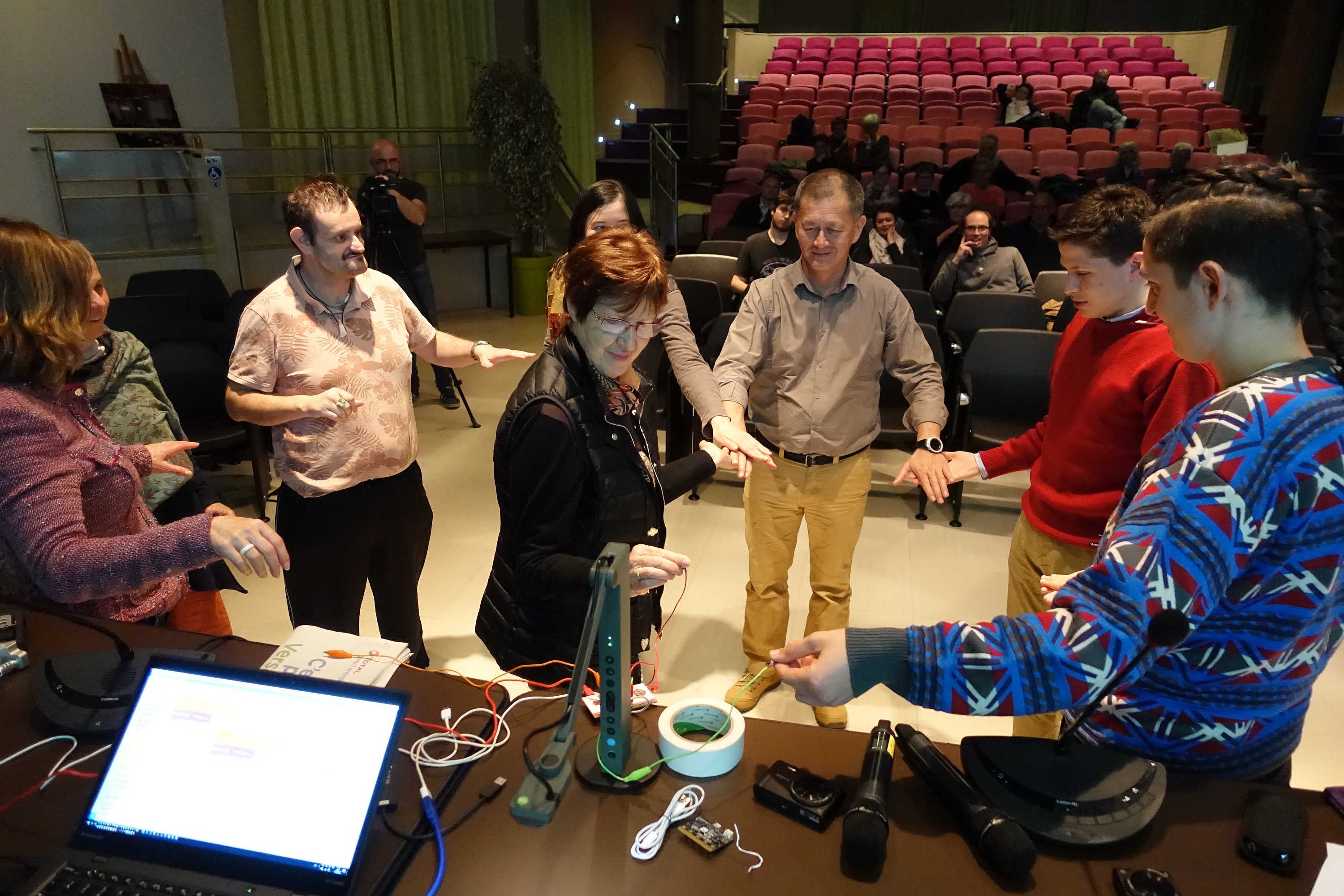
Popular education in the 21st Century must reinvent practices linked to the emergence of these digital continents: enable everyone to become more agile with these new tools/uses, regain spaces of freedom, train parents to educate their children in these new practices, enable all and all ages to survive in the technological surge.
And by stimulating collective reflection on the philosophical and sociological issues surrounding the use of digital technology today, YMCAs and popular education continue to meet the ambition of Article 1 of their statutes: ...offers the population, young people and adults alike, the opportunity to become aware of their abilities, develop their personality and prepare to become active and responsible citizens of a living democracy.
Pierre-Olivier Laulanné & Benoît Labourdette