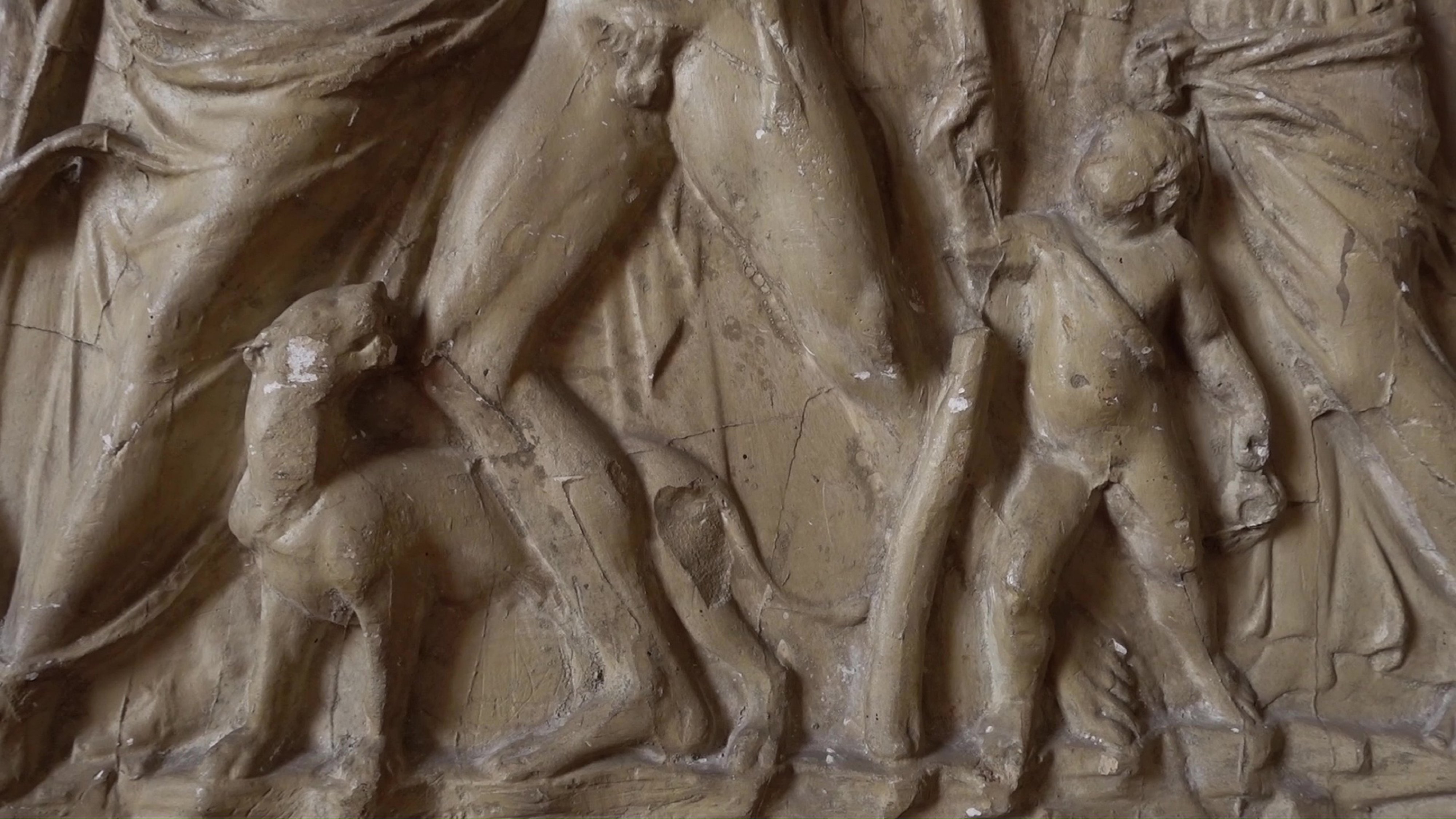
Florian Vörös proposes that we deconstruct the category “pornography,” inherited from nineteenth-century media regulation. I take his lead onto educational ground: the moralising discourse that claims to protect young people forbids them to speak of what they live, teaches them hypocrisy as a skill, and manufactures the very fragility it believes it is fighting.
A category that passes itself off as self-evident
In his article published on AOC in June 2026, Florian Vörös, a lecturer in information and communication sciences at the University of Lille, makes a point I share: “pornography” functions, even within progressive discourse, as a moral self-evidence whose contours are almost never defined. The relational and sexual education curriculum published in 2025 opposes “erotic aesthetics” and “pornographic representation” without saying what distinguishes them. Official reports condemn it now for its lack of realism, now for its violence, without specifying what a realistic and non-violent representation of sexuality would be. The sex educator is then invested with a strange power: that of distinguishing, by their mere status as an educated adult, the true from the false and the consensual from the violent, and of transmitting this supposedly obvious discernment to young people.
What interests me in Vörös’s approach is that it does not set out to defend pornography or to condemn it, but to open the black box of the category. And that opening connects with work I have long pursued on the way our mental categories manufacture what they claim to describe. I have called this mechanism, in another text, the cage of representations: we carve up the real, we sort it into boxes, and these boxes end up standing in for reality itself. Pornography is one of these boxes, particularly effective because it is laden with shame, and shame discourages examination. What I want to show here, following Vörös and then going beyond him, is that this box has a history, that it speaks in the place of the people concerned, that it conflates realities which have nothing in common, and that its educational use produces the opposite of what it promises.
The archaeology of a word
Research in cultural history, which Vörös invokes without always naming it, allows us to date the appearance of the category. The word itself was born in French from the pen of Restif de la Bretonne, whose Le Pornographe (1769) is not a licentious work but a project for the regulation of prostitution. The thread continues into the nineteenth century with the hygienist treatise of Parent-Duchâtelet, De la prostitution dans la ville de Paris (1836), which applies to prostitutes the inspection methods its author had developed as a specialist of the sewers. “Pornography” first means, etymologically, writing about prostitutes, and that writing is the writing of administration and sanitary policing.
Walter Kendrick, in The Secret Museum (1987), shows how the category then shifts from persons to images, starting from a revealing episode: the reaction of scholars to the sexually explicit objects unearthed at Pompeii, which were locked away in a “secret cabinet” of the Naples museum reserved for learned men alone. Lynn Hunt, in The Invention of Pornography (1993), makes the mechanism more precise. Pornography is not a stable corpus of images but a social creation, defined jointly by those who produce it and those who seek to stamp it out. What the category regulated, in the early nineteenth century, was the access of women, the lower classes, the young and colonised peoples to representations deemed dangerous for them. Kendrick stresses that, well into the 1880s, the images were often forbidden to the very groups they represented.
This historical distance changes the status of the question. Obscenity is not a property of images but a feeling situated in time and space. The Pompeian fresco that scandalised nineteenth-century scholars belonged, for the Romans who had painted it in a place of passage, to an altogether different regime of visibility. The category does not describe the images, it draws a boundary, and that boundary tells us who dominates.
The only authorised way of speaking about it
In The History of Sexuality, Volume 1: The Will to Knowledge (1976), Michel Foucault dismantles what he calls the repressive hypothesis, the received idea that the Christian and then bourgeois West silenced sex. What he establishes is more unsettling: our societies have never stopped speaking about it, but in minutely regulated forms. The Christian pastoral organises avowal through confession; then medicine, psychiatry, demography and pedagogy take over, and decide who may speak of sex, in what terms, in which places, before whom. Western man has become, Foucault writes, a “confessing animal.” The power exercised over sexuality does not merely say no; it produces discourses, forms of knowledge, norms, and it is through this production that it holds bodies.
Contemporary educational discourse on pornography descends in a direct line from that pastoral. It does not impose silence on sex; the school now officially devotes three sessions a year to it. It imposes the grid of enunciation. A pupil may speak of pornography in class, on one tacit but absolute condition: to speak of it as a scourge. The expected avowal has changed in content, it has kept its structure. We no longer ask “confess that you have sinned,” we ask “acknowledge that it is violent, that it is not reality, that it is a danger.” The morality of religious origin does not survive in a ban on speaking of sex; it survives in the obligation to speak of it in only one way. Its vocabulary has been secularised, the guilty flesh has become “exposure to content,” sin has become “addiction,” but the structure remains: sexuality is still the site of a fault against which one must guard, and the world set against the real, a dreamt-of sexuality without images, without commerce, without trouble and without ambivalence, is an idealised world that has existed nowhere and at no time.
This policing of statements has found its industrial form in the moderation of digital platforms, where the puritan approach of the large North American companies tends to treat all nudity as sexual and all sexuality as pornographic. Content creators engaged in sex education are the first to be exposed to the logics of removal, shadowbanning and demonetisation. I have analysed elsewhere, under the name of authorisation regime, the structure in which everything is forbidden except what an authority expressly permits, whereas a democracy ought to make freedom the rule and prohibition a justified exception. The category “pornography” gradually extends this regime to sexual imaginaries themselves: representations of sexuality must now obtain a kind of prior moral authorisation, and whatever fails to obtain it tips over to the side of the suspect, including feminist and queer pedagogies, that is, the very ones that work toward emancipation.
Listening to those who live from it
There is a simple test for recognising a discourse of domination: it talks about people without ever talking to them. Discourses on “pornography” and on “prostitution” are almost always held by people who have no experience of them, about people one never hears. The “Pornocriminality” report published by the High Council for Equality in 2023 provides a documented example: the association Allies of Sex Workers pointed out that the report, starting from the premise that the industry is criminal, gave the floor to no performer in the sector. Victims’ accounts are mobilised in it, but in order to generalise, so that only one response becomes thinkable, prohibition. The same report recommends banning the very notion of “sex work” from all public communication, which amounts to banning a word in order to make unthinkable what it designates, and to erasing from language the self-designation that the people concerned have chosen for themselves.
Yet that voice exists, and has for a long time. Grisélidis Réal, a writer, painter and prostitute from Geneva, recounted her trade from the inside in books (Le noir est une couleur, La Passe imaginaire) and claimed it publicly for thirty years: “Prostitution is an Art, a Humanism and a Science,” she writes in the preface to Carnet de bal d’une courtisane (2005), specifying elsewhere that this holds on condition that it is practised voluntarily and in good conditions. That condition is not a stylistic clause, it is the heart of her position: the problem is not the activity, it is the conditions, and this shift of the gaze, from essence to conditions, is exactly the one the category “pornography” prevents. Virginie Despentes, in King Kong Theory (2006), recounts her own experience of occasional prostitution and refuses to have the single narrative of the victim imposed on her, without embellishing anything of the harshness she describes. The STRASS, the French sex workers’ union founded in 2009, which also represents performers in pornographic films, states its refusal to be reduced to victims to be rescued against their will, and its weariness at seeing public speech confiscated by figures presented as specialists, doctors, moralists, abolitionist activists, who speak in their place.
Today, creators publish sexual content on subscription platforms, with no producer, no film set, no intermediary other than the platform itself, and claim this activity as a choice. One may judge that choice problematic, one may see in it the effects of an economy that pushes bodies onto the market, and that critique has its legitimacy. But the gaze that concludes in advance “poor things, they are dominated without realising it” has a logical flaw and a political flaw. The logical flaw: it is unfalsifiable, since whatever the person says in her own defence will be entered into the file of her alienation. The political flaw: it reproduces line for line the gesture of the nineteenth century, deciding in the place of women, the young and the lower classes what they may see, do and say of their own lives. Listening is not concluding. The violence in certain productions, revealed by the “French Bukkake” and “Jacquie et Michel” cases, is real and must be prosecuted for the crimes it is. It is the listening to the people concerned that makes it possible to distinguish situations, where the category melts them into one indistinct mass.
What the category conflates: the couple, the text, the drawing
Many people watch images or read sexually explicit texts as couples, to feed a desire that the long duration of a relationship does not always suffice to sustain. This shared, chosen use, woven into an emotional life, bears no resemblance to the portrait of the alienated solitary consumer that saturates public debate. It is almost never mentioned, no doubt because it disturbs the narrative: it is difficult to maintain that pornography destroys couples when couples use it to find each other again.
The plurality of forms completes the category’s incoherence. Sexually explicit representation is not only audiovisual: communities of reading and writing erotic fiction have been alive since the beginnings of the internet, and erotic manga flourish on paper. Yet a text and a drawing have no conditions of production in the sense meant by the critique of film shoots: no one suffers anything in them, no body is engaged. If the category encompasses them all the same in one reprobation, it is because the real grievance does not bear on the protection of actual persons but on representation itself, in other words on morality. As for films, they are shot with performers whose acts are real but whose performance is a fiction, as stunt performers take real risks in the service of an invented story. For both, the legitimate question bears on working conditions, consent, safety, pay, and not on the representation’s right to exist. By melting the victimless text, the bodiless drawing, the fiction performed by consenting adults and the filmed crime into one and the same box, the category protects no one; it merely reveals that what it targets, at bottom, is the sexual imagination itself.
The sext, the image of oneself, and the box we file them in
The anthropological shift underway makes the category altogether inoperative. A large part of the younger generations, and not only them, exchange sexually explicit photos and texts with their partners. This practice, once confined to certain sexual cultures, now belongs to the ordinary repertoire. Two people send each other images of themselves naked, they do so by choice, in consent, sometimes to sustain desire at a distance, sometimes as a language in its own right. In what box do we file this gesture?
If we stick to the form, it is sexually explicit representation, and therefore, by the logic of the category, pornography. And pornography being declared violent and degrading, this consensual gesture ought to be so as well. The absurdity of the conclusion reveals the flaw in the premise. What distinguishes the consensual sext from filmed rape is not the amount of visible skin or the explicitness of the act, it is the relation of power within which the image is produced and circulates. That is what the category “pornography” erases, since it classifies by form and not by relation.
I have encountered this unease within educational teams. Young people send their support workers images of themselves bare-chested, unsolicited intimate images, and the team wonders, legitimately, how to receive them. But the first question, the one that decides everything, comes earlier; it bears on the reason for the gesture and on the function it fulfils for the person who makes it. The reflex of the category answers before having listened. It files the gesture under danger, deviance, the image that damages, and it closes off access to the meaning that gesture holds for its author.
What the spread of sexual images of oneself brings to light is that sexuality remains a cultural construction shot through with representations, and that we are cultural animals who invest our intimate experiences with symbols. The sext extends a very old symbolic labour, the one by which a glance, a letter, a garment, a message feed desire. To treat it as a pathology of the digital age is to fail to see what it inherits.
Hypocrisy as a learned skill
The whole debate on pornography presents itself as an educational debate: it is in the name of the young that filtering, banning and denouncing are done. Yet young people live in a world where sexual images exist, where the sext belongs to the amorous repertoire, where pornography is part of the landscape, just as for previous generations it was part of the world in other forms. And they grow up facing adults who hold on all of this a single moralising discourse, which in effect forbids any speech about lived experience, and all the more any speech that would find anything positive in it. A pupil who said in class “I once learned something from a video,” or “the images I exchange with the person I love matter to me,” would immediately be sent back to their foolishness, their immorality, their unawareness of danger. So that young person learns something other than what we believe we are teaching them.
The political scientist James C. Scott provided a solid frame for understanding what is learned there. In Domination and the Arts of Resistance (1990), he shows that every relation of domination produces two registers of speech: the public transcript, what the dominated say in the presence of the dominant, conforming to what the latter expect, and the hidden transcript, what is said among themselves, out of their sight. The dominated acquire a decisive social skill, that of holding the public transcript with the appearance of sincerity. This is what educational discourse on pornography manufactures. Pupils quickly learn the public transcript: it is violent, it is not reality, one must be careful. They recite it to the adults who expect it and are satisfied by it, believing they have educated. And the real life of experiences, of questions, of troubles, passes into the hidden transcript, among peers, which Vörös observes from his own side when he notes that young people’s sexual reflexivities are built mostly outside the classroom, in the conversations among themselves. The school thinks it is transmitting critical thinking; it teaches recitation, that is, hypocrisy as a skill. And that skill, once acquired, will serve elsewhere, for learning that there exists a public discourse to be held, disconnected from what one lives and thinks, is a lesson that generalises.
The philosopher Miranda Fricker allows us to name the other side of the same damage. In Epistemic Injustice (2007), she calls hermeneutical injustice the situation of a person deprived of the collective interpretive resources that would allow them to understand and say their own experience. Her best-known example is that of women who suffered sexual harassment before the expression existed: they lived the thing without having a word to think it with, and this deprivation of a word compounded the wrong suffered. Young people are placed in a structurally analogous situation, in reverse: for their experiences bound up with sexual images, the only available public lexicon is that of fault and danger. An ambivalent experience, troubling, sometimes happy, sometimes damaging, often all of this at once, is granted no fitting word. Yet an experience one cannot say is an experience one cannot think, and an experience one cannot think is an experience in which one remains alone. That is the manufacture of fragility: not first the exposure to images, but the hermeneutical solitude before them.
The moralising educational discourse produces the opposite of what it promises. It promised protection, and it isolates, since it deprives of support those who would need it, while pretending to give it to them. It promised the awakening of critical thinking, and it teaches enunciative conformism, the recitation of slogans one is not allowed to discuss. As for the taboo it claimed to lift, it reconstitutes it in a more solid form, since the prohibition no longer bears on the subject, of which everyone speaks abundantly, but on experience, of which nothing can be said. And this inversion is accomplished in perfectly good conscience, which is the signature of adult domination: imposing a point of view without having taken the trouble to work on the subject on which one imposes it, without serious inquiry into uses, without listening to the people concerned, without defining the terms one employs. For pornography, and more broadly the representation of sexuality, is a difficult subject, and young people would need, on that path, adults capable of holding the complexity with them. Instead, they are given a slogan and forbidden the rest.
What the category makes us miss
It is not a matter of saying that everything is healthy in what we call pornography. There are real forms of violence in certain conditions of production, situations of exploitation, content that eroticises and naturalises domination, and uses bound up with ways of performing masculinity that must be nameable and open to criticism. The problem is not that we concern ourselves with this, it is that we concern ourselves with it through a category that prevents us from distinguishing what needs to be distinguished, and through a discourse that forbids the one thing that would make support possible, speech about experience.
To isolate “pornography” from the rest of cultural consumption is to make oneself incapable of understanding how masculine domination is manufactured, which is precisely not manufactured there, or not only there, but within a whole set of practices, socialisations and pre-existing relations of which images are only one element. Reception studies bear this out: women viewers actively question the consent and the authenticity of the pleasure of the women they see on screen, representations do not mechanically induce behaviours, and their meaning is built locally, within trajectories and relations of force that precede them. To de-essentialise pornography is to give ourselves back the means to de-naturalise domination, by questioning the whole range of contexts that reproduce it rather than a convenient scapegoat.
The category “pornography” is reassuring because it designates an external enemy, one that can be banned, filtered, blocked. To give up this box is not to give up critique, it is to recover its possibility. As long as we denounce an essence, we do not think the relations of power, we cover them over with a word; and as long as we prescribe to young people the only discourse they may hold on what they live, we are not educating them, we are teaching them to lie.


