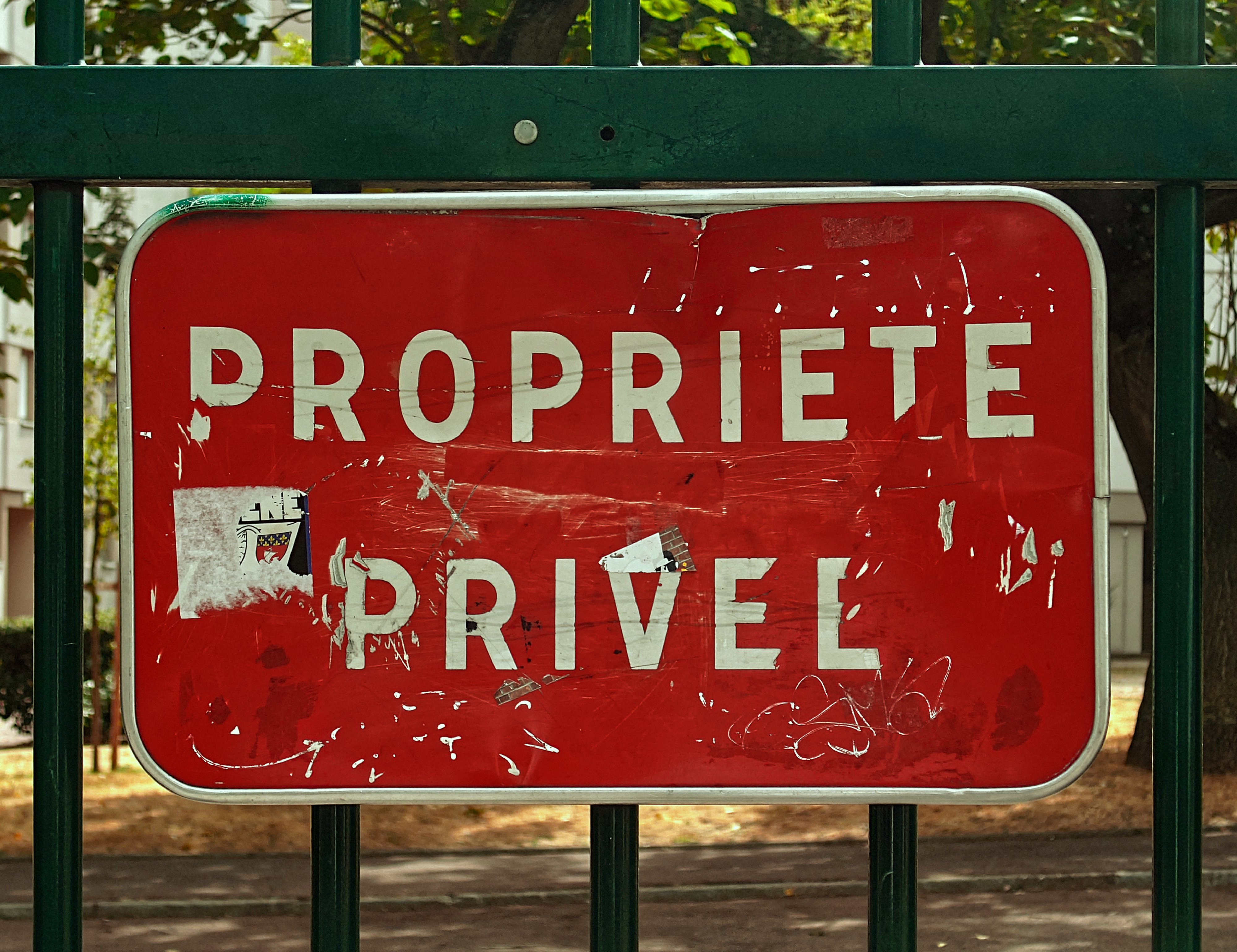
Everyone has the right to enter a library or a museum, just as everyone has the right to vote, and yet many people never exercise these rights. My argument here is that what is missing is not legal but institutional, in the symbolic and psychic sense of the word: to exercise a right, you need to feel instituted in it. From institutional psychotherapy and institutional pedagogy, which I have been putting into practice for years, I draw a precise method for this, from the creation of the place through to the final presentation.
The necessary and insufficient right
When I criticize cultural democratization, people often object that the places it has built over the decades, libraries, museums, public theaters, are open to everyone. The objection is fair. A municipal library is free, a museum is accessible, no one is denied entry, and this right to go there, established by decades of public policy, is important. But the right to vote also exists for everyone, and a large proportion of citizens do not vote. The existence of a right is a necessary condition of its exercise, but it is not a sufficient one. This is what I want to show in this article: where this gap between a right and its exercise comes from, why it involves public action far more than we tend to believe, and how it can be worked on concretely. For if we persuade ourselves that the existence of rights is enough for them to be respected, we conclude that there is nothing left for us to do, and that is where the work stops, precisely where it should begin.
Philippe Warin and the researchers of Odenore, the French observatory of the non-take-up of rights and services, have documented this gap far beyond culture: people do not use benefits, support and resources to which they are nevertheless entitled, often because they do not know these rights exist, or because they do not feel concerned by them. It has happened to me, and it probably happens to each of us.
It is to work on this gap, it seems to me, that the concept of cultural rights was forged. The point is not to add rights to rights, but to specify the conditions under which existing rights can really be exercised, and this specification involves first of all those who hold positions of power. Activists and professionals in the disability field have built an enlightening notion to think this through, universal accessibility. Rather than asking people to adapt to spaces designed without them, or adding special arrangements after the fact, spaces, services and information are designed from the outset so that everyone can use them: a ramp planned from the start of construction serves the wheelchair user, and also the elderly person, the stroller, the delivery man. With this notion, the responsibility for access changes sides: it no longer falls on the people who are excluded, but on those who design the places. I propose to think about cultural rights in the same way. When you hold a place in public affairs, when you carry a public service mission, you have the responsibility to design your action so that the power you hold does not produce discrimination, and to trace the paths that make the exercise of the right possible. The person in front of us is a citizen like us, a subject of rights, who does not necessarily know it. It is therefore not enough to pronounce the words “cultural rights” for everything to be settled as if by magic: these words designate a task, more demanding and more precise than merely guaranteeing the right of access.
The economist Amartya Sen built an entire body of thought on this gap between formal rights and real freedom. He distinguishes functionings, that is, the states and actions a person actually accomplishes, from capability, that is, the extent of what she is really free to accomplish:
“Closely related to the notion of functionings is that of the capability to function. It represents the various combinations of functionings (beings and doings) that the person can achieve. Capability is, thus, a set of vectors of functionings, reflecting the person’s freedom to lead one type of life or another.”
Amartya Sen, “Inequality Reexamined”, 1992.
Two people who have the same right to enter a museum do not have the same capability to experience something there. Sen draws a political consequence from this distinction: a just society does not settle for distributing rights and resources, it concerns itself with what people can really do with them. So where does this gap between a right and the capacity to exercise it come from? I propose an answer: it comes from the institution.
The institution in the symbolic sense
I use the word institution in a broader sense than administration or establishment. The institution is everything that institutes us: our job title, our place in an organization chart, our role in a family, in a group, in a society. Cornelius Castoriadis devoted his life’s work to this phenomenon. For him, a society holds together through an instituted imaginary, the set of significations it has created and takes for granted, and it only transforms itself through its instituting power, its capacity to create new significations and new forms:
“Society is self-creation. ’What’ creates society and history is the instituting society, as opposed to the instituted society; the instituting society, that is, the social imaginary in the radical sense.”
Cornelius Castoriadis, “Domaines de l’homme”, 1986.
Castoriadis adds that most societies hide this origin from themselves: they attribute their institutions to the ancestors, the gods, nature, and thereby forbid themselves from transforming them. He calls autonomy the opposite movement, that of a society which knows that it creates its own institutions and allows itself to call them into question.
At the individual level, the mechanism seems to me the same. It is because I am instituted with various functions, by others and by myself, that I feel capable of acting, or not. An institution can hold us back or authorize us. This path is psychic before being legal. Feeling instituted with the right to enter somewhere, to speak up there, to touch the works, to propose something, cannot be decreed by a law or by the free admission of a facility. It is built, or it is not built, in each person’s history, in their family, in their social trajectory. And it can also be built, later, in concrete situations that institute differently.
Creating the institution together
This is precisely the object of institutional psychotherapy. At the clinic of La Borde, founded by Jean Oury in 1953 in the lineage of François Tosquelles, for whom the hospital itself had to be treated as much as the patients, caregivers and patients meet and decide together on everyone’s roles: a caregiver can do the cleaning, a patient can take on a responsibility. The institution is not given in advance, the people present create it collectively, and this work of creation heals as much as the care itself. I have already described what this way of thinking brings to the framework of mediation and to the suspension of roles in care institutions. Fernand Oury and Aïda Vasquez, in the lineage of Célestin Freinet, transposed the same gesture to the classroom with institutional pedagogy: pupils build with their teacher the rules, responsibilities and councils that organize their life together.
I put this principle into practice constantly, and it often begins with the material creation of the place. When I arrive somewhere to make films with people, the first activity of the day consists, for example, in transforming the classroom into a movie theater: setting up the chairs, blacking out the windows, mounting the screen, adjusting the sound. This can take three quarters of an hour. In view of the stated goal, making a film, this time seems at first sight useless; it is in fact essential. Everyone has contributed in their own way, at their own level, to the making of the place. We have created a tangible symbolic space: there is nothing on the screen yet, but we know that the films we are going to make, this is where we will see them. And this institution we have created gives meaning to everyone’s place and to what we are going to do together. It is not imposed on us, it does not assign us to places: we see it exist, concretely.
This point seems decisive to me: the institution exists because it serves. It serves to bring something into existence collectively; its role is collective. A person alone hardly needs an institution. In a collective, everyone sees concretely what it is for, because everyone accomplishes a complementary part of the work, and it is thanks to these complementarities that something can be built. This is why certain common school practices destroy the institution at the very moment one believes one is motivating the pupils. Having several groups each write a screenplay, then choosing “the best one”, replaces complementarity with competition: the group whose screenplay is chosen is pleased, the others are not at all, and this breaks the collective dynamic, self-esteem and recognition by the group. I work the other way round: looking, in each group, for the singular stone each person can bring to the edifice.
The same gesture continues in the formation of groups and roles. When a workshop or a working day requires forming small groups, I take the time to make it an institutional moment. And it is not I who assign the roles according to needs I would supposedly know in advance. I know roughly what making a film is; it is in the discussion that we discover together what is needed, and what each person can bring. Someone knows how to make music: music will take a more important place in this project than the one I would have imagined alone. I had planned a fixed camera around which the pupils would move; some want to take charge of the camera: they will move it, and will have far more to do than pressing a button. The film will not be the one I would have made, because the others bring stones to the edifice that I could not have imagined. That is what really creating the institution means, as opposed to being assigned a role; and that is the very subject of cooperation in cultural rights. So we discuss the tasks, I write the names on the screen, everyone takes their place, moves, negotiates. With young people this sometimes takes time, and almost always an adult present offers to decide for them so as to move on. I answer that this time is not wasted: the people are creating their place in the institution formed by the groups of that day, and this creation conditions everything that follows. I told the story of those few seconds that adults find hard to bear in the article The Thirty Seconds That Belong to Them. At the end of the discussion, I print out the roles that were decided, and these sheets accompany the work: when someone no longer remembers, they find there the institution they forged themselves.
This work begins with expression, that is, with the person. At the start of virtual reality creation projects with middle school students, notably in special-needs classes, during first meetings by videoconference, I set out a principle: we have the right to say what we feel, including that we do not want to be here or to do this project. The institution’s function is to allow the person to express themselves, to flourish, to emancipate themselves; if it forbids sincere expression, the person will never be fully instituted, and a kind of lie will remain at the foundation of the common work. Everyone then makes their own way. Over the year, these pupils took charge of making a film in all its real complexity, and that is what astonished the teachers present: the efficiency, the pleasure, the meaning the pupils gave to things, not because it was easy, but because everyone acted in a precise role they had instituted for themselves. Music gave an example of this, which I described as a method in « The Ambient Sound Chorus »: each pupil played an instrument, and together they made the soundscape of the moon live. Nothing realistic, and that was just fine: on the moon there is no air, therefore no sound, therefore any lunar sound is pure imagination. Since we were in creation and not in imitation, everyone could take a real place in the imaginary, and in the film you can hear the instruments of all the pupils.
Remaining actors through to the final presentation
The instituting work does not stop with the making. In an artistic practice workshop, there is the object you create, and there is the story you tell about it, for yourself and for others: the traces of the process, what you choose to show, the way you show it. This final presentation, too, we organize together. It is the participants who decide what they are going to show, who remain actors through to the end, and not the professionals who organize the screening, take the credit through it, improve the film or do the editing in people’s place.
I have seen final presentations where the institution reimposed itself at the end of the process. Young people who had taken part in a film discovered themselves in close-up on the screen, in front of an audience, without having approved the film or taken part in the editing. The process that leads there is almost always the same, and it is hypocritically de-instituting. The young people are instituted at the start: they are asked to write screenplays, they have ideas. Then professionals finalize the screenplay, professionals run the shoot where the young people act, professionals do the editing, and the young people discover themselves on the screen. We assume they will be pleased to see themselves writ large; but they are the ones who took part, and they have been de-instituted at every step. Some are shocked, ashamed, do not want their image to be shown that way. And because the structures need, to justify their funding, the film “which is good” to be shown, professionals sometimes exert pressure, to the point of circumventing image rights and people’s consent. This sometimes makes “good films”, and it does harm: the films become objects of production, they are no longer objects of education. It is a false cultural democracy.
For my film “Droit à la parole” (“The Right to Speak”), shot at the La Source school, we had image rights authorizations from all the people who appear, children and teachers. I nevertheless absolutely insisted on organizing, before any release, a screening with all these people, so that they could see the film and agree to it. And the editing was done progressively, over six months. This was indispensable for this institution, the film these people are part of, to belong to them. When the process institutes people from beginning to end, the question of final consent no longer even arises: it has been settled along the way.
An institution that predates the people
I come back to the library and the museum. The places, the collections, the criteria of what deserves to be transmitted, the ways of behaving there: in cultural democratization, everything is already built when the person arrives. She has the right to enter, and this right is real. But she enters an institution she did not create and which does not belong to her.
This arrangement works for part of the population: those who already carry, from their family, social and cultural history, the feeling that these places are also theirs. They are, in the sense I have described, already instituted. For the others, the right to enter remains a formal right, without the corresponding capability, and this gap cannot be filled by a communication campaign, because it is not a matter of information.
This is the mechanism I was looking for beneath the meritocratic myth of democratization. A democratization that does not call into question its own institutional construction, that does not open the creation of the institution itself to people, produces domination. No one wants this; yet it happens, because such a democratization structurally reserves the real exercise of rights for those who are already instituted. The many mediation actions through which professionals invite people to feel at home in these places are precious, and those who carry them out are already working, without always naming it, on this institutional dimension.
The time spent on rules is part of the game
Children know this work better than we do. When they play, they spend a considerable amount of time discussing the rules before playing, and often during the game. The adult watching them may think they have wasted their time, that they played so little. Jean Piaget showed the contrary in “The Moral Judgment of the Child”, which opens with a statement whose scope goes far beyond childhood:
“All morality consists in a system of rules, and the essence of all morality is to be sought for in the respect which the individual acquires for these rules.”
Jean Piaget, “The Moral Judgment of the Child”, 1932.
And it is from the minute observation of games of marbles that Piaget establishes it: it is by negotiating rules among peers that children move from heteronomy, where the rule comes from above and seems sacred, to autonomy, where the rule becomes a mutual agreement that can be transformed together. The game remains a game, and children do far more than play in it: they build themselves, in large part through the discussion of the rules.
I propose to transpose this to cultural action. The time spent debating the rules is not a preliminary to the action, to be dispatched so as to finally get to the real subject: that would be putting the action back on its pedestal. This time is part of the action, it is perhaps its heart. And we must accept that the planned action comes out of it transformed, sometimes beyond recognition.
A museum mediator prepared a themed tour for a group. Because she really opens the debate on the rules, she realizes that the group does not want this tour. These young people spend their days shut in a classroom; in the museum there are other visitors, you must not make noise; they are not in that frame of mind, and they have the right not to be. She senses that drawing would interest them, and going outside. She goes to get felt pens, notebooks, beautiful materials, because that is what she can bring, herself, into the common institution, and everyone brings what they can. The group walks through the street drawing the space around it, then enters the museum at the very end to place, ephemerally, its drawings next to the works, look for connections, take photos. How to place the drawings, which photos to choose: the group discusses this too, and thus institutes even the traces of its passage.
Some will perhaps judge that these people did not take the time to really look at the works. We know nothing about that. Human perception is astonishingly powerful: a brief moment in front of a work can give enormously, and this perception belongs to the people; it can be very strong where, from the outside, everything seemed rushed. What counts is the story each person can build of what they experienced. Without anyone explaining to them that works of art absolutely must be admired, these young people were in contact with them, they take home reproductions of them, and the photo of their drawing placed next to a work may be shown, passed on; it will make its way. Thanks to digital tools, which extend our memory, this technical exteriorization of memory that Bernard Stiegler described, the trace of the process remains available, and what seemed ephemeral can go on acting for a long time.
In cultural rights, this is the subject of cooperation, a question of governance. This shared governance destabilizes us, professionals, because we are no longer the only ones governing. This destabilization is part of cultural rights, and I believe it can be worked on like the rest: by giving ourselves frameworks to go through it.
Cultural rights as instituting work
So I propose to define the implementation of cultural rights as instituting work. Guaranteeing the right of access is a prerequisite, largely achieved in France. The work that remains consists in opening the institutional construction itself to people, at every scale where it is possible, from the formation of a small workshop group to the governance of a facility. Every time people create a piece of institution together, they institute themselves in their rights, in the sense that they psychically build the capacity to exercise them. I described in « Authorizing Creation » how an act of creation can carry this authorization within itself; institutional work is its collective and organizational side. Réseau Culture 21, with its “Typologies” of cultural rights in action, has built landmarks for the self-assessment of institutions, going as far as designating shared governance as a field to cultivate; the method I describe here, centered on the instituting gesture itself, seems to me complementary to that work.
Concretely, here are the points of support I draw from my practice:
- Begin with people’s expression, explicitly authorizing sincere expression, including refusal of or disagreement with the project itself.
- Materially create the place together: setting up, transforming, arranging the workspace, so that the symbolic space belongs to those who are going to act in it.
- Form the groups and roles in discussion, discovering together everyone’s needs and contributions, rather than assigning roles defined in advance.
- Seek complementarity, never competition: do not put contributions in competition, and look for the singular stone each person can bring to the edifice.
- Accept that this takes time, and consider this time as the heart of the action rather than as a preliminary.
- Keep accessible traces of the institution created (roles written down, displayed, printed, photos of the process), so that everyone can refer to them without depending on the facilitator.
- Accept that the planned action be transformed by what people express, and bring into the common institution what one can bring, like everyone else.
- Organize the final presentation with the participants: they are the ones who decide what is shown, through to the end of the process.
- Open, whenever possible, the question of governance: who decides on the framework, and how to share that decision.
This definition has a practical consequence for professionals: the time spent building the framework with people is not time wasted before the real work, it is the real work. And it has a political consequence: to assess a cultural action in terms of cultural rights is to look at who created the institution in which it takes place.


